Golden Baked Perfect Apple Pie
The apples bake on flat trays first to release their extra moisture, so the bottom crust on this classic Apple Pie stays firm and crisp.
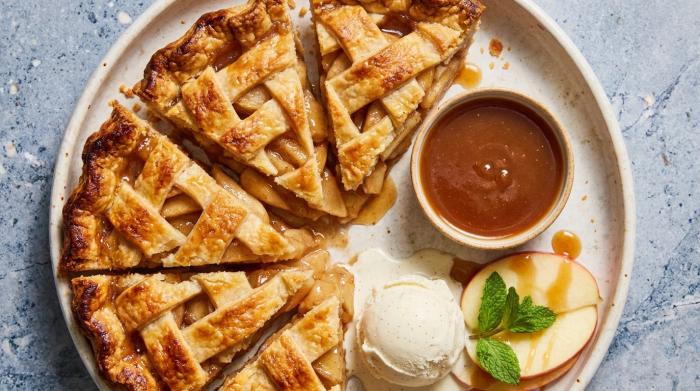
A classic Golden Baked Perfect Apple Pie starts with 4 lb (2 kg) of Granny Smith apples. You bake the fruit on flat trays first to release its extra moisture so the bottom crust stays firm and crisp. The leftover juices simmer with butter to make a thick syrup.
The pie crust
Pastry dough made exclusively with butter delivers a much richer flavor than one containing vegetable shortening. A store-bought crust serves as a perfectly good substitute as long as it is prepared following the package instructions. Combining the dough with a motorized mixer prevents the heat of your hands from melting the butter, which guarantees the flakiest possible crust.
You roll out a single pastry disc until it is 9 inches (23 cm) wide. You transfer the dough by rolling it directly onto a rolling pin. This step stops the dough from stretching. Stretched dough shrinks heavily during baking. Trim the excess dough around the edges.
Blind baking
Take a fork and poke the bottom of the pastry 30 times. Cover the crust and leave it in the freezer for 2 hours. You freeze the pastry-lined tin before blind baking to stop pastry shrinkage. You can wrap unbaked pie crust in plastic wrap and freeze it for up to one month.
Baking the empty crust before adding the apples guarantees a completely cooked and crispy base. Arrange two sheets of baking paper over the dough to form an overlapping cross. This layout keeps the pastry edges from browning too much and makes it simple to lift away your weights after cooking. Fill the lined crust with ceramic baking beads. If you lack ceramic beads, raw rice or dry chickpeas work perfectly well as a replacement.
Put the pan in a 400°F (200°C) oven and bake the crust for 25 minutes. Lift out the paper sheets and the baking beads. Brush the whisked egg across the bottom and inside walls of the pastry shell. This coating seals the dough and stops the filling juices from soaking into the base. Leave the top rim completely bare. Applying egg wash to the outer edge prior to the final bake leads to burnt pastry. Return the tin to the oven for 5 minutes so the dough finishes cooking and turns a pale gold color.
The lattice top
Remove the remaining dough from the refrigerator. Roll the dough until it is 0.125 inches (3 mm) thick. Cut the dough into 12 strips that measure 1 inch (2.5 cm) wide. Transfer the strips to a board and refrigerate them. You can use a solid pastry lid with a cross cut into the center for steam ventilation instead of a woven lattice.
The apple pie filling
Granny Smith apples provide a tart flavor that balances the sugar. They also keep their shape well when baked. Mix the brown sugar, ground cinnamon, ground ginger, ground nutmeg, and cooking salt in a large bowl. Toss the apple slices until every piece is coated.
Divide the apple slices between two baking trays. Arrange the fruit in an even layer. Bake the slices in a 350°F (180°C) oven for 40 minutes. The apples are ready when they feel soft but keep their shape. You bake the fruit early to cook it evenly and stop an empty cavity from forming beneath the crust. Raw apples will release too much liquid and make the pastry base soggy. Varieties that lack juice or turn soft during cooking will make a dry or mushy filling. Let the apple slices cool for 15 minutes so they do not overcook during the final baking time.
The apple syrup
Empty the hot apple juices off your baking pans straight into a saucepan. Throwing away the liquid released during baking removes a significant source of natural flavor.
Add the unsalted butter to the liquid. Simmer the mixture over low heat for 3 to 5 minutes. The liquid cooks down to a final 0.33 cup (80 ml) volume. You reduce the juices to create a thick syrup that clings to the fruit and protects the crust from getting soggy. Take the saucepan off the heat and let it cool.
Assemble and bake
Transfer the cooled apple slices into the fully baked crust, stopping when the shell is two-thirds full. Press down gently on the fruit to help the pieces pack tightly together. Stack the remaining apples directly in the middle to form a small dome.
Pour the cooled apple syrup onto the fruit. Tip any extra liquid from the baking trays onto the apples.
Lay the chilled pastry strips across the filling to build the lattice top. Push the ends of each strip into the bottom pastry rim so the layers stick together. Cut off the extra dough around the outside.
Brush the lattice with the remaining whisked egg. Do not let the egg wash pool in the lattice joints or it will create an uneven finish. Sprinkle the white sugar over the top. Regular sugar creates a sparkling finish on the crust. Caster or superfine sugar melts into the dough.
Cooling and slicing
Bake the pie in a 400°F (200°C) oven for 45 minutes. Pull the pie out when the crust is golden and the syrup is bubbling.
The baked pie requires at least three hours of cooling before slicing. This waiting time keeps the structure solid. Cover the pie securely and place it in the refrigerator overnight if you want to cut neat slices.
Serving and leftovers
Turn the cold pie out of the tin and cut it cleanly into slices. Reheat the slices in a 350°F (180°C) oven for 10 minutes.
Apple pie is traditionally served warm alongside a scoop of vanilla ice cream and cream.
Leftover baked apple pie can be stored in the refrigerator for up to four days.
Golden Baked Perfect Apple Pie
Pie crust
- 1 egg, lightly whisked
- 2 batches homemade shortcrust pastry, this recipe, or store bought, Note 1
- 2 tsp white sugar, granulated/regular, not caster/superfine, optional, Note 2
Apple Pie Filling
- 0.5 tsp ground ginger
- 1 cup brown sugar
- 4 lb Granny Smith apples, cored, peeled, halved, and cut into 0.33-inch (1 cm) thick slices, Note 3
- 1 tsp unsalted butter
- 1 tsp ground cinnamon
- 0.25 tsp ground nutmeg
- 0.75 tsp cooking/kosher salt
Assemble and bake
- Vanilla ice cream and cream, for serving
We may earn a small commission from grocery & equipment links, at no cost to you. Disclosure.
Method
Pie crust
Apple Pie Filling
Pie crust
Lattice
Assemble and bake
Substitutions
Raw rice or dry beans can act as weights in place of ceramic beads when you blind bake the pastry.
If you prefer not to weave a lattice top, a solid pastry lid with a cross cut into the center for steam ventilation works perfectly.
Storage
An unbaked Pie crust shaped in the tin can be wrapped tightly in plastic wrap and frozen for up to one month.
Any leftover Golden Baked Perfect Apple Pie can be stored safely in the refrigerator for up to four days.
Serving
For the neatest presentation, let the pie chill in the refrigerator overnight before turning it out to cut and reheating the slices at 350°F (180°C).
Common mistakes
Make sure you do not brush the outer pie rim with egg wash before the final bake to prevent the exposed edges from burning.
Roll the raw dough onto a rolling pin to transfer it to the tin, since tugging or pulling the pastry by hand causes it to shrink aggressively during baking.
Do not let the egg wash pool in the lattice joints because it will create an uneven and unsightly finish on your pie.
Techniques
Baking the fruit before assembling the pie prevents a mushy texture and ensures you do not end up with an empty cavity beneath the crust.
Reducing the baked fruit juices into a syrup concentrates the flavor and prevents the Apple Pie Filling from making the base soggy.
Keeping all pastry ingredients and tools ice cold before mixing is a reliable way to achieve a tender and flaky dough.
Placing your pie tin on a preheated baking sheet helps conduct heat directly to the bottom crust for a crisper bake.
- Store
- An unbaked Pie crust shaped in the tin can be wrapped tightly in plastic wrap and frozen for up to one month. Any leftover Golden Baked Perfect Apple Pie can be stored safely in the refrigerator for up to four days.
Why did my pie crust end up soggy on the bottom?
The pastry base will absorb juices and turn soggy if you skip blind baking or load the pie with raw apples. To ensure a crispy bottom crust, bake the empty shell completely, then brush the inside with whisked egg. This egg layer seals the dough to block the liquid from the filling.
Why do I need to roast the apples before putting them in the pie?
Roasting the fruit first draws out extra moisture and prevents the apples from turning into mush during the long bake. It also completely eliminates the empty air cavity that forms beneath the top crust when raw apples cook down and shrink.
Can I use a sweeter apple variety instead of Granny Smith?
Granny Smith apples are highly recommended because their tart flavor perfectly balances the brown sugar in the filling. They also retain their shape beautifully under heat, whereas softer apple varieties often create a dry or mushy filling.
Do I have to make a woven lattice top?
You can absolutely use a solid sheet of pastry for the top crust instead of cutting out 1-inch strips for a lattice. Just remember to cut a small cross into the center of the dough lid so steam can escape while the pie bakes.
What should I do if I do not own ceramic baking beads?
If you lack ceramic baking beads, you can hold the pastry flat during the blind bake using common pantry staples like raw lentils or dry chickpeas. Be sure to arrange overlapping sheets of baking paper in a cross shape first, which protects the rim from over-browning and allows you to lift the weights out cleanly after the crust sets.
Can I make the pastry base ahead of time?
Yes, you can prepare the unbaked pie crust and shape it directly in your baking tin. Wrap the lined tin tightly in plastic wrap and store it in the freezer for up to one month before you plan to bake.
How do I easily move my rolled pie dough into the pan without tearing it?
The safest method is to gently roll the flat pastry loosely around your rolling pin. You can then lift it over your baking pan and unroll it into place without stretching the dough, which prevents aggressive shrinkage in the oven.
Why is it important to let a fruit pie cool completely before cutting into it?
Resting a baked pie gives the hot, bubbling fruit juices time to set and thicken as they cool down. If you slice into the pastry while it is still piping hot, the filling will lose its structure and flow out onto your plate.
Add a private note
Private to this device - jot your tweaks, swaps and timings. (Syncs to your account later.)
What to serve with it
See all →
You might also like
See all →
The Friday 3-recipe dinner plan 🧡
Every Friday: three tested weeknight dinners + one shopping list, ready to go. No spam, ever - unsubscribe anytime.