French Vegetable Stew (A Thick, Braised Ratatouille)
The vegetables stay firm and juicy in this Ratatouille (French Vegetable Stew) because you cook them in short stages before the final braise.
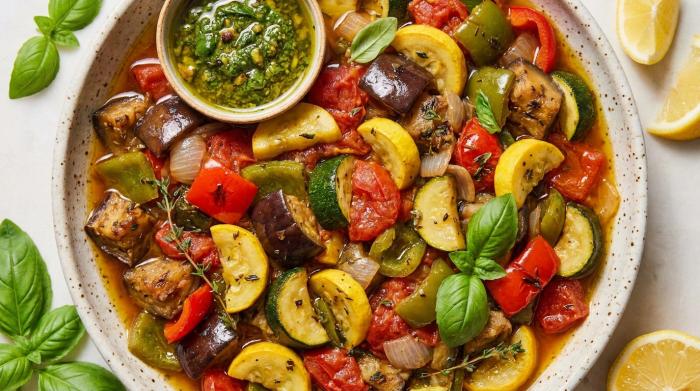
This traditional French stew features summer vegetables like eggplant, zucchini, capsicum, and tomatoes. You cook the produce in short stages to give this French Vegetable Stew (A Thick, Braised Ratatouille) a thick consistency instead of a watery puddle. Sautéing each ingredient on its own keeps the pieces firm through the final 20 to 25 minute uncovered braise.
The Eggplant Prep
Modern eggplants lack the bitter traits older varieties had. You salt the cubes anyway and let them sit for 30 minutes to tenderize the flesh. This resting period stops the pieces from soaking up too much oil later.
The salt pulls water to the surface. Leave this moisture on the cubes. The water boils away in the hot skillet. The residual salt seasons the entire dish.
The Stew Base
Fresh tomatoes form the sauce for this recipe. You pulse them in a blender or food processor until smooth.
As an alternative to fresh tomatoes, you can use one 14 oz (400 g) can of crushed tomatoes or two cups of tomato passata. Select high-quality canned goods for this step. Low-quality cans will create a flavorless and sour sauce base.
Dropping every vegetable into a single tall pot will trap moisture, causing the ingredients to steam and break down into a flavorless mush. Sautéing the components separately in a wide skillet prevents this problem. The broad surface of a skillet allows water to evaporate quickly, giving the vegetables a chance to brown.
You start the cooking process by searing the eggplant in extra virgin olive oil over medium-high heat. The outsides turn golden while the centers stay firm. You transfer the eggplant to a taller pot for the final braise. Next, you cook the chopped onions and minced garlic in the empty skillet until they soften.
The capsicums go into the skillet next. You cook them for just three minutes. The outsides cook quickly, but the centers stay raw and firm.
You follow the same short cook time for the diced zucchini. You do not need to worry about browning these green and yellow pieces.
Once all the partially cooked vegetables sit in the large pot, you pour in the pureed tomatoes. You add the fresh thyme and pitted black olives. A small amount of olives adds salty bites without hiding the vegetable tastes.
It is easy to adapt these components based on your available ingredients. If you do not have fresh thyme and basil, use a half teaspoon of dried thyme instead. You can also introduce additional produce into the skillet steps, such as spinach or kale.
The final braise happens with the lid off. The excess liquid boils away over 20 to 25 minutes. The mixture reduces into a thick mound of tender vegetables holding plenty of juice.
The Garnish
You must taste the hot stew before taking it off the stove. Add a pinch of salt if it tastes bland. Stir in chopped fresh basil and finish the bowls with a drizzle of olive oil. You can use fresh parsley in place of basil for the finish.
Serving and Storage
This dish works as a vegetarian main dish next to a piece of crusty bread. You have a few other options for serving:
- Spoon the stew over toasted bread for bruschetta or crostini.
- Fold the mixture inside a warm omelette.
- Serve it as a side dish alongside pork, poultry, or seafood.
The cooked vegetables hold up well in the refrigerator. You can store the leftovers in a sealed container for up to five days.
French Vegetable Stew (A Thick, Braised Ratatouille)
Eggplant Prep
- 1 eggplant (aubergine), cut into 0.75-inch (2 cm) cubes with skin on, about 16 oz / 450 g
- 0.5 tsp kosher or cooking salt
Stew Base
- 3 tomatoes, chopped, about 5 oz / 150 g each
- 2 brown onions, chopped into 0.4-inch (1 cm) cubes, about 5 oz / 150 g each
- 2 garlic cloves, finely chopped, about 3 tsp
- 6 tbsp extra virgin olive oil
- 2 capsicums (1 red, 1 yellow), cut into 0.8-inch (2 cm) cubes, about 7 oz / 200 g each
- 2 zucchinis (courgettes), diced into 0.5-inch (1.5 cm) pieces, about 7 oz / 200 g each
- 20 black olives, pitted and halved
- 1 tsp chopped fresh thyme leaves
- 0.75 tsp kosher or cooking salt
- 0.25 tsp black pepper
Garnish
- 1 tbsp finely chopped fresh basil, plus more for garnish
- Extra virgin olive oil, for drizzling
We may earn a small commission from grocery & equipment links, at no cost to you. Disclosure.
Method
Eggplant Prep
Stew Base
Garnish
Substitutions
You can replace the fresh tomatoes in the Stew Base with one 14-ounce (400 g) can of crushed tomatoes or two cups of tomato passata.
Adapt the recipe by adding or substituting other produce like kale, celery, spinach, fennel, or mushrooms.
Storage
The cooked French Vegetable Stew keeps well in the refrigerator for up to five days.
Serving
Serve the French Vegetable Stew as a vegetarian main dish alongside crusty bread, or use it as a savory filling for omelettes.
Common mistakes
Sauté the vegetables separately in a wide skillet rather than cooking them all together to prevent them from steaming into a mushy texture.
Always taste the stew at the very end and adjust the salt if needed to avoid a bland finish.
Techniques
Salting the Eggplant Prep helps tenderize the flesh and reduces how much oil it absorbs during cooking.
Take care to cut all your vegetables into uniform pieces so they cook at an even rate.
Allow your skillet to preheat completely before adding the oil to ensure a better sear and prevent the vegetables from sticking.
Choose the ripest produce available when blending a fresh sauce base for the best natural sweetness and depth of flavor.
- Store
- The cooked French Vegetable Stew keeps well in the refrigerator for up to five days.
Do I need to rinse or wipe the water off the Eggplant Prep after it sweats?
No, leave the drawn moisture right on the cubes. The liquid will evaporate quickly in the hot skillet, and the residual salt is needed to properly season the French Vegetable Stew.
What happens if I cook all the Stew Base ingredients together at once to save time?
Dumping every vegetable into the pot at once traps all the released moisture and forces the pieces to steam. Cooking them this way prevents any browning and breaks the produce down into a flavorless mush.
Why do I need to braise the French Vegetable Stew with the lid off?
Simmering the stew uncovered allows the excess liquid from the vegetables to boil away. This reduction process transforms the dish into a thick, scoopable mound rather than a watery puddle.
Can I make the Stew Base if I do not have fresh herbs on hand?
Yes, you can replace the fresh thyme and basil with a half teaspoon of dried thyme, dried oregano, or a blend of mixed herbs. You can also use fresh parsley as the final Garnish if you are out of basil.
Why did my finished sauce turn out sour?
If you swapped the fresh tomatoes for canned ones, using a cheap or low-quality brand can make the sauce base taste tart and sour. Always taste the mixture at the very end and adjust the salt to help balance out the flavors.
How do I know when my skillet is properly preheated before adding oil?
Flick a few drops of water into the dry pan as it heats. If the water beads up and evaporates almost instantly, the pan is hot enough to properly sear the vegetables without them sticking.
Can I freeze vegetable stews?
Yes, you can freeze most braised vegetable stews in an airtight container for up to three months. The vegetables might soften slightly upon thawing, but the flavors often deepen and improve.
Add a private note
Private to this device - jot your tweaks, swaps and timings. (Syncs to your account later.)
What to serve with it
See all →


You might also like
See all →


The Friday 3-recipe dinner plan 🧡
Every Friday: three tested weeknight dinners + one shopping list, ready to go. No spam, ever - unsubscribe anytime.