Fall-Apart Lamb Shanks in a Thick Red Wine Sauce
The meat bakes for two and a half hours until it turns ultra tender and barely holds the bone in these Lamb Shanks in Red Wine Sauce.
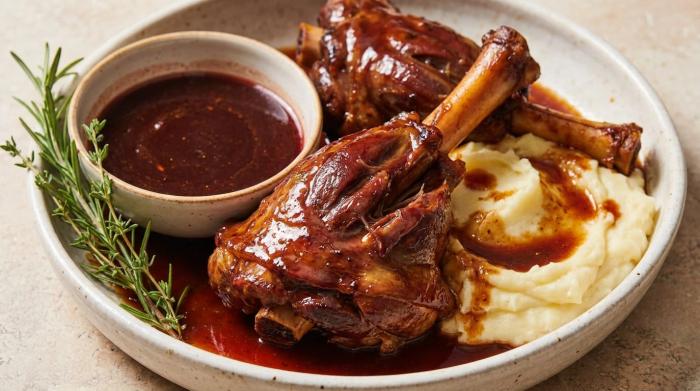
Cooking four tough lower leg cuts for 2 1/2 hours produces these Fall-Apart Lamb Shanks in a Thick Red Wine Sauce. The long oven session breaks down the muscle until it easily pulls away with a fork. During this time, marrow dissolves into the pot to build a smooth, glossy gravy.
The lamb shanks
Because lamb shanks are naturally tough cuts, they need to cook slowly to become tender. Try to find pieces that weigh roughly 13 ounces (400 grams) each. Always use paper towels to pat the meat dry before adding your seasoning. Getting rid of the surface moisture ensures the lamb browns properly in the pan.
The red wine sauce base
A full-bodied red wine builds the braising liquid. Cabernet Sauvignon, Merlot, or Shiraz all work well. Pinot Noir is too light to stand up to the strong meat. An inexpensive bottle works exactly the same as a premium wine for slow cooking. You also need a large can of crushed tomatoes. Avoid low-quality canned tomatoes. They can introduce unwanted sourness to the final sauce.
Building the braise
Sear the shanks in batches over high heat for five minutes. Do not skip this step. The initial meat browning step provides a strong base for the braise.
After removing the lamb, drop the heat and cook the onions, garlic, carrots, and celery. Give the vegetables a full five minutes to cook so they release their natural sweetness. A rushed vegetable sautéing process leaves the final sauce tasting sour. You can omit the carrots and celery from the aromatic base if necessary.
Baking the lamb
Position the shanks in your pot to keep the meaty ends mostly submerged in the braising liquid. Secure a tight lid and place the pot in the oven at 350°F (180°C). Let the meat braise covered for two hours, then take the lid off for thirty more minutes to ensure a fall-apart texture. If a Dutch oven is unavailable, you can use a regular baking dish tightly sealed under two sheets of aluminum foil.
Alternative cooking methods
You can prepare the lamb outside of the oven if you prefer.
- To use a slow cooker, deglaze the stovetop pot first and then cook the shanks on low for eight hours.
- To pressure cook, prepare the base on the stove and process on high pressure for forty minutes.
- To cook on the stovetop, simmer the covered pot on low for two hours. Turn the meat twice and monitor the liquid levels closely so the sauce does not burn on the bottom.
Finishing the sauce
Remove the lamb shanks from the pot and cover them to retain their heat. Pour the leftover braising liquid through a sieve into a bowl to get a smooth sauce, pushing down on the cooked vegetables to release all their trapped juices. If the strained liquid is too thin, simmer it on the stove over medium heat until it reduces to a syrupy texture. You have the option to blend the sauce ingredients together instead of straining them if you prefer a thicker consistency. Whenever the canned tomatoes leave the sauce tasting too acidic, fix the balance by stirring in a little bit of sugar or honey.
Wine substitutions
If you prefer not to cook with regular wine, you have two simple alternatives.
- Swap the regular red wine for an equal volume of alcohol-free red wine.
- Mix one and a half cups of low-sodium beef broth, one cup of water, and one tablespoon of Worcestershire sauce.
Do not simply swap the wine for extra chicken stock. Extra stock makes the heavily reduced sauce too salty.
Making the lamb ahead
The dish can be kept warm in the covered cooking pot for extended periods before serving. You can also cook the shanks a day in advance. A resting period allows the flavors to deepen overnight before you reheat the meat.
For Serving
Bring the finished plates together with a few complementary sides.
- Serve the shanks over creamy mashed potatoes, polenta, or cauliflower puree.
- Add a vegetable side dish, such as green beans or steamed asparagus, alongside the meat.
- Provide crusty bread on the side so you can absorb the rich braising liquid.
- Garnish the meat with fresh thyme leaves.
Fall-Apart Lamb Shanks in a Thick Red Wine Sauce
The Braise
- 4 lamb shanks, about 13 oz (400 g) each
- 2 cup low-sodium chicken stock or water
- 1 onion, finely diced, brown, yellow, or white
- 3 garlic cloves, minced
- 1 cup peeled and finely diced carrot
- 1 cup finely diced celery
- 1 can (28 oz / 800 g) crushed tomatoes
- 2 tbsp tomato paste
- 2 tbsp olive oil, divided
- 2.5 cup full-bodied red wine, an affordable bottle is fine
- 1 tsp each kosher salt and pepper
- 5 sprigs fresh thyme (tied together), or 2 tsp dried thyme
- 2 dried bay leaves, or 4 fresh
To Serve
- Mashed potatoes, polenta, or cauliflower puree
- Fresh thyme leaves, optional
We may earn a small commission from grocery & equipment links, at no cost to you. Disclosure.
Method
Substitutions
Replace the red wine with one and a half cups of low-sodium beef broth mixed with one cup of water and a tablespoon of Worcestershire sauce for an alcohol-free braise.
If you lack a Dutch oven, you can cook the meat in a regular baking dish sealed tightly under two sheets of aluminum foil.
Storage
Cooking these Fall-Apart Lamb Shanks in a Thick Red Wine Sauce a day in advance allows the savory flavors to deepen overnight before reheating.
Serving
Offer plenty of crusty bread alongside the mashed potatoes or cauliflower puree to absorb every drop of the rich braising liquid.
Warm your serving bowls slightly before plating hot braises to keep the glossy sauces from cooling and congealing too quickly.
Common mistakes
Do not rush cooking the diced vegetables because giving them time to release their natural sweetness prevents the final sauce from tasting sour.
Using additional chicken stock in place of the wine is a bad idea because the heavily reduced sauce will become unpleasantly salty.
Always sear meat in loose batches because overcrowding the pan traps moisture and causes the cuts to steam instead of brown.
Techniques
Select a full-bodied red wine like Shiraz or Cabernet Sauvignon for the braising liquid, since a lighter Pinot Noir is too delicate to match the robust flavor of the lamb.
To adapt this recipe for a slow cooker, deglaze your stovetop pan into the insert and cook the seared shanks on low for eight hours.
Allow large cuts of braised meat to rest briefly in their warm liquid off the heat so the muscle fibers can relax and absorb moisture.
- Store
- Cooking these Fall-Apart Lamb Shanks in a Thick Red Wine Sauce a day in advance allows the savory flavors to deepen overnight before reheating.
What if I do not want to use red wine?
An identical volume of alcohol-free red wine serves as a direct replacement. You can also substitute the liquid by mixing 1.5 cups of low-sodium beef broth together with 1 cup of water and 1 tablespoon of Worcestershire sauce.
How do I thicken the sauce without reducing it on the stove?
Instead of straining the cooked vegetables out of the liquid, you can blend the sauce ingredients together. This yields a thicker consistency without needing extra time to simmer.
Can I freeze braised meat?
Yes, braised dishes freeze beautifully because the rich sauces protect the meat from drying out. Cool everything completely, then store the meat and liquid together in an airtight container.
What vegetables pair well with this meal?
Pair this meal with green vegetables such as cooked spinach or sweet peas. To catch all the rich sauce, plate the meat over a bed of mashed potatoes or warm polenta.
Why should I warm my serving bowls?
Plating hot braises in slightly warmed bowls keeps glossy sauces from cooling and congealing too quickly. This ensures your meal stays appetizing from start to finish.
Why did my sauce turn out tasting sour?
When the final liquid turns out overly tart, it often means the onions, carrots, and celery were not cooked long enough to release their sweetness, or poor-quality canned tomatoes were used. Simply whisk a little sugar or honey into the pot to balance the acidity.
Why shouldn't I crowd the pan when browning the meat?
Searing meat in loose batches prevents moisture from getting trapped in the pot. An overcrowded pan causes the cuts to steam instead of developing a flavorful brown crust.
Can I cook these Fall-Apart Lamb Shanks in a Thick Red Wine Sauce on the stovetop instead of the oven?
Yes, you can simmer the covered pot on the stove over low heat for two hours. Turn the meat twice and monitor the liquid levels closely so the sauce does not burn on the bottom.
How do I adapt this for a pressure cooker?
Prepare the foundational base on the stove as directed, then process the meat and liquid on high pressure for forty minutes.
Why do I need to rest braised meat?
Allowing large cuts of braised meat to rest briefly in their warm liquid off the heat helps the muscle fibers relax. This simple step ensures the meat absorbs moisture and stays tender.
Add a private note
Private to this device - jot your tweaks, swaps and timings. (Syncs to your account later.)
What to serve with it
See all →
You might also like
See all →


The Friday 3-recipe dinner plan 🧡
Every Friday: three tested weeknight dinners + one shopping list, ready to go. No spam, ever - unsubscribe anytime.