
A Simple, Slow-Simmered Chicken Stock Recipe for Soups
Cooking raw frames on low heat extracts all the natural gelatin and keeps the liquid clear for this classic chicken stock from scratch.
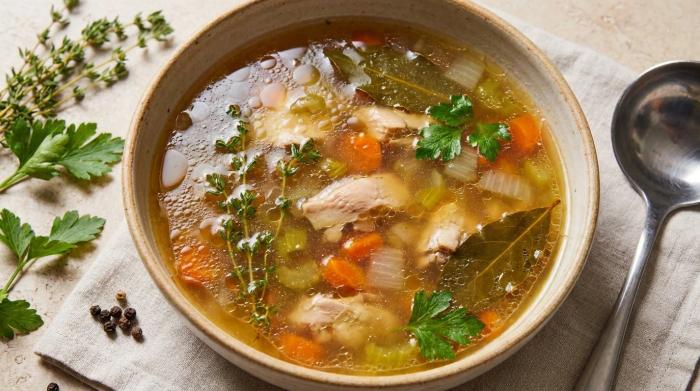
Gentle heat extracts high amounts of natural gelatin from raw chicken frames. This simple process builds a Classic Clear Homemade Chicken Stock Recipe from Scratch. Raw bones keep the liquid clear and clean. You will get exactly 2 quarts (2 litres) of unsalted base for soups and stews.
Bone selection
Raw chicken carcasses provide an optimal balance of flavor and collagen. Cooked frames from roasted chickens lack the flavor needed for a standard batch. Whole raw chickens do not hold enough flavor for this volume of water. Skin-on cuts like thighs make the liquid greasy and cloudy. Chicken breasts lack sufficient collagen. Wing tips and feet contain high amounts of gelatin. They increase the jelly texture. Giblets carry a strong offal flavor. You should leave them out.
Vegetables and aromatics
Root vegetables such as carrot, celery, and onion give the base a mild hint of natural sugar. Using one tablespoon of apple cider vinegar helps pull nutrients from the bones, and it does this without making the final batch taste sour.
Stock Base
Place the raw chicken frames, root vegetables, herbs, peppercorns, and apple cider vinegar into a large pot that holds 7 quarts (7 litres) or more. Arrange the items carefully without crushing the bones, because doing so will make the liquid cloudy. Pour in 3 quarts (3 litres) of cold tap water to just cover the contents.
Set the stove to medium-high heat. Cloudy foam collects at the top during the initial heat. Remove this foam with a ladle to maintain clarity.
Turn the stove down to low. A rapid boil causes the final product to become murky. Watch for a slight ripple and occasional soft bubbles.
Pour the finished liquid through a fine strainer to catch all the solid pieces.
Measure the strained liquid over low heat. A yield over 2.25 quarts (2.25 litres) requires more reduction. Simmer the strained stock to reduce the volume. A final volume under 2 quarts (2 litres) needs extra water. Pour in plain water to reach the exact mark.
Cooling the liquid
Turn off the heat. Hot liquid placed directly into the refrigerator creates food safety and cooling issues. Divide the hot liquid into smaller containers to accelerate the cooling process. Allow the liquid to reach room temperature on the counter before refrigerating. Cold temperatures force the fat to rise to the top. The fat solidifies into a hard white layer. Gelatin extracted from the bones gives the chilled liquid a thick jelly texture.
Storage & Use
Scrape the solidified fat from the chilled surface to create a clear base for soups. Throw the fat out. Store the clear liquid in the refrigerator for up to 5 days. Keep the portions in the freezer for up to 6 months. One-cup increments simplify measuring for future recipes.
Pour this clear liquid into soups, pot roasts, and thick chilies. Cooking rice directly in the broth lets the grains soak up the savory taste. Since the base has no salt, you can reduce it heavily to build concentrated sauces and a rich jus. Trying the same deep reduction with a commercial base leaves the meal far too salty. When cooking, you can add the chilled jelly straight into warm pans, where it will melt right away. To mimic the sodium amounts found in grocery store versions, dissolve 0.25 tsp of salt into every 1 cup (250ml) of the liquid.
A Simple, Slow-Simmered Chicken Stock Recipe for Soups
Stock Base
- 4 lb raw chicken frames, carcasses
- 1 medium unpeeled carrot, cut into 4 equal pieces
- 0.5 peeled onion, halved
- 1 celery stem, cut into 4 pieces, include the leaves
- 3 parsley sprigs
- 1 tbsp apple cider vinegar
- 3 quart cold tap water
- 0.5 tbsp black peppercorns
- 2 fresh bay leaves, or 1 dried bay leaf
- 2 fresh thyme sprigs, or 0.5 tsp dried thyme leaves
We may earn a small commission from grocery & equipment links, at no cost to you. Disclosure.
Method
Stock Base
Storage & Use
Substitutions
Add extra collagen by including wing tips and chicken feet in your Stock Base for a richer, more gelatinous finish.
Skip skin-on cuts like thighs to keep the liquid from becoming overly greasy, and avoid chicken breasts since they lack the necessary collagen.
Storage
Store the unsalted liquid in one-cup increments in the refrigerator for up to five days or freeze them for up to six months for easy Storage & Use.
Chilling the strained liquid forces the fat to solidify at the top, making it effortless to scrape away and discard before cooking.
Leave at least an inch of empty space at the top of your containers when freezing liquids to allow room for the contents to expand.
Serving
Because this base is unsalted, you can reduce the liquid heavily to create concentrated sauces and jus without making them excessively salty.
When making soups or stews, stir in 0.25 teaspoons of salt for each 1 cup (250ml) of liquid to match typical commercial sodium levels.
Common mistakes
Never use cooked carcasses from roasted chickens or whole raw chickens for your Stock Base because they will yield a weak and flavorless liquid.
Putting hot liquid directly into the refrigerator creates food safety hazards and cooling issues, so always let it reach room temperature on the counter first.
Techniques
Keep the simmer gentle and avoid crushing the bones in the pot to prevent your Classic Clear Homemade Chicken Stock Recipe from Scratch from becoming murky.
A tablespoon of apple cider vinegar assists in drawing nutrients out of the raw frames, and it will not make the finished base taste sour.
Always start your stock with cold water to gently draw out the maximum amount of flavor and gelatin from the bones as the pot slowly heats up.
- Store
- Store the unsalted liquid in one-cup increments in the refrigerator for up to five days or freeze them for up to six months for easy Storage & Use. Chilling the strained liquid forces the fat to solidify at the top, making it effortless to scrape away and discard before cooking. Leave at least an inch of empty space at the top of your containers when freezing liquids to allow room for the contents to expand.
Can I add chicken feet or wing tips to the pot?
Including wing tips and chicken feet will increase the richness of the final liquid. These specific parts hold high amounts of gelatin, and extracting this component ensures the chilled stock develops a jelly-like texture.
Why did my stock turn out cloudy and greasy?
A murky liquid usually happens if the pot reaches a rapid boil, or if the bones are crushed during cooking. Skin-on cuts like thighs will also make the liquid greasy. Maintain a gentle simmer and use raw carcasses to keep your Classic Clear Homemade Chicken Stock Recipe from Scratch perfectly clear.
How much salt should I add to the finished base?
This recipe produces a completely unsalted liquid so you can heavily reduce it for concentrated sauces without making them excessively salty. When making soups or stews, stir in 0.25 teaspoons of salt for each 1 cup (250ml) of liquid to match typical commercial sodium levels.
Can I freeze the stock in jars?
Yes, but you must always leave at least an inch of empty space at the top of your containers when freezing liquids. The liquid will expand as it freezes, and this extra room prevents the containers from breaking.
Why do I need to start the bones in cold water?
Starting with cold water gently draws out the maximum amount of flavor and gelatin from the bones. As the pot slowly heats up, these elements release into the liquid much more effectively than if you started with hot water.
What is the easiest way to remove the fat?
Allow your containers to reach room temperature on the counter, and then refrigerate them. Chilling the strained liquid forces the fat to solidify at the top, making it effortless to scrape away and discard before your Storage & Use phase.
Add a private note
Private to this device - jot your tweaks, swaps and timings. (Syncs to your account later.)
What to serve with it
See all →





You might also like
See all →


The Friday 3-recipe dinner plan 🧡
Every Friday: three tested weeknight dinners + one shopping list, ready to go. No spam, ever - unsubscribe anytime.