
The Best Creamy Classic Baked Cheesecake
A slow bake and room-temperature ingredients keep this creamy Classic Baked Cheesecake beautifully smooth without a fussy water bath.
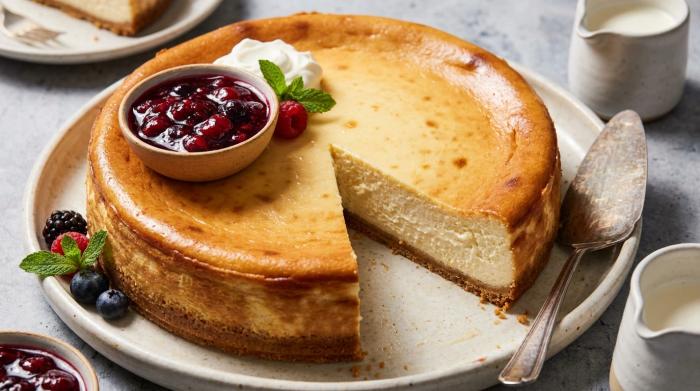
A Classic Baked Cheesecake takes 55 minutes in the oven and requires zero fussy water baths. A low baking temperature and a gentle mixing method keep the heavy cream cheese filling smooth. The slow bake leaves the surface flat and ready for fresh fruit.
Springform PAN PREP
A standard 8-inch (20 cm) springform pan typically features a metal base with a raised lip around the edge. You want to invert that base to eliminate the ridge. A flat surface makes transferring the dessert to a serving platter much easier later on. Trap a square of parchment paper inside the pan when you clip the outer ring over the inverted base. This paper overhang acts as a handle for moving the chilled cake.
Grease the inside walls with butter and press a strip of parchment against the metal to coat the sides.
Mixing the CRUST
The recipe needs two cups of fine crumbs. Graham crackers yield a slightly crunchier shell because they do not crush quite as fine as other plain biscuits. You can run the crackers through a food processor or crush them inside a sealed plastic bag with a heavy rolling pin.
Mix the melted butter into the crumbs. Pulse the machine or stir by hand until the crumbs feel like damp beach sand. This wet sand texture allows the mixture to pack tightly up the vertical walls of the pan.
Pour the damp crumbs into the lined pan. Grab a flat-bottomed measuring cup with straight edges. Press the cup hard against the inside edges to build the crust up toward the upper rim. Press the bottom layer down flat. The unbaked shell feels quite delicate right now. It becomes stable once baked with the heavy filling inside.
Preparing the FILLING
Cold dairy will not mix properly. Bring your eggs and cream cheese all the way to room temperature before you begin. Room temperature ingredients blend quickly into a smooth batter. If you only have soft tub cream cheese on hand, you must omit the sour cream from the bowl.
Beat the softened cream cheese on medium-high speed for 30 seconds. Add the flour and mix just until the white powder disappears. Drop the sugar, vanilla extract, sour cream, and lemon zest into the bowl. Beat the mixture for 10 to 15 seconds.
Add the eggs individually. Beat the batter for 10 seconds after each egg. Stop the machine immediately once the yellow yolk disappears. A long mixing time traps air bubbles inside the dairy. The trapped air causes the cake to puff up in the oven, collapse, and crack down the middle.
Baking and cooling
You can skip the water bath entirely, as it is unnecessary for this technique. Gently pour the batter into your crust. A low oven temperature of 320°F (160°C) stops the top of the dessert from splitting open. Bake the cake for 55 minutes. By the end of this time, the top will turn a pale golden brown color while the middle will still jiggle slightly.
A fast temperature drop outside the oven increases the risk of surface cracks. You can let the pan cool slowly in the turned-off oven with the door slightly ajar.
Chilling and the GARNISH
Let the pan reach room temperature. Transfer the tin to the refrigerator. Chill the dessert in its pan for at least four hours before you attempt to remove the sides.
Unclip the metal ring and lift it away. Grab the parchment overhang and pull gently to slide the cake off the metal base. Arrange fresh strawberries, blueberries, and raspberries over the flat top. Dust powdered sugar over the fresh fruit right before serving. You can arrange the berries and sugar to hide any minor surface cracks.
The Best Creamy Classic Baked Cheesecake
CRUST
- 7 oz Arnott's Marie crackers, plain biscuits, or 28 Graham Cracker squares
- 8 tbsp unsalted butter, melted
FILLING
- 3 large eggs, at room temperature
- Zest of 1 lemon
- 2 tbsp all-purpose flour
- 1.5 cup superfine sugar
- 1 lb cream cheese, softened
- 0.5 cup full-fat sour cream
- 1 tsp vanilla extract
GARNISH
- Fresh strawberries, blueberries, and raspberries
- Powdered sugar, for dusting
We may earn a small commission from grocery & equipment links, at no cost to you. Disclosure.
Method
PAN PREP
CRUST
FILLING
GARNISH
Substitutions
If you only have access to soft tub cream cheese, you must omit the sour cream from the filling.
If you lack a food processor, simply seal the crackers inside a bag and crush them into fine crumbs using a large can.
Storage
Leave the cheesecake fully assembled in its metal pan during the entire refrigeration period before attempting to unclip and remove the outer ring.
Baked cheesecakes freeze beautifully for several months when wrapped tightly in plastic wrap and a protective layer of aluminum foil.
Serving
Strategically placing your fresh berry garnish and dusting heavily with powdered sugar is an easy way to hide any unexpected surface cracks.
Wiping your knife blade clean with a warm, damp towel between every cut guarantees perfectly neat dessert slices.
Common mistakes
Using cold cream cheese or eggs prevents the filling from mixing smoothly and leaves lumps in the batter.
Overbeating the filling incorporates excess air bubbles that cause the cake to puff up in the oven, collapse, and ultimately crack.
Techniques
Flipping the bottom of your springform pan upside down gets rid of the raised metal edge, which simplifies pulling the parchment overhang to move the baked dessert onto a platter.
Use a flat-bottomed measuring cup with straight edges to firmly pack the wet crust evenly across the bottom and up the sides of the pan.
This low-temperature baking method skips the fussy water bath entirely while still yielding a perfectly smooth dessert.
Always bring dairy ingredients to room temperature before baking so they blend into a completely uniform batter without requiring excessive mixing.
- Store
- Leave the cheesecake fully assembled in its metal pan during the entire refrigeration period before attempting to unclip and remove the outer ring. Baked cheesecakes freeze beautifully for several months when wrapped tightly in plastic wrap and a protective layer of aluminum foil.
Can I use spreadable cream cheese from a tub?
You can use soft tub cream cheese if that is all you have. However, you must completely omit the 0.5 cup of sour cream from the filling.
How do I crush the crackers if I do not own a food processor?
To skip the food processor, put the plain biscuits or Graham crackers in a sealed bag. Smash them into fine crumbs with a large can, though a heavy rolling pin works well too.
Do I need to bake this in a water bath?
No, a water bath is completely unnecessary for this recipe. Baking the dessert at a low 320°F (160°C) guarantees a smooth filling and stops the top from splitting.
How do I easily transfer the finished dessert to a serving platter?
Turning the bottom piece of your 8-inch (20 cm) springform pan upside down gets rid of the metal ridge. Clipping a square of parchment paper inside the pan gives you a helpful overhang, making it easy to slide the chilled dessert off the bottom plate.
How do I pack the crust firmly up the sides of the pan?
Grab a flat-bottomed measuring cup with straight, vertical edges. Press the cup firmly against the damp cracker crumbs to build the shell securely up the walls.
Why did my cheesecake crack in the middle?
Cracks usually happen because of overbeating the filling or cooling the cake too quickly outside the oven. Mixing the eggs for too long traps air bubbles that cause the dessert to puff up, collapse, and ultimately crack.
When is it safe to unclip the outer ring of the pan?
Leave the cheesecake fully assembled in the metal pan while it cools at room temperature and during the entire refrigeration period. Wait to unclip the sides until it has chilled for at least 4 hours.
How can I hide cracks on the surface of my cheesecake?
You can easily camouflage minor surface flaws with your garnish. Strategically arrange the fresh strawberries, blueberries, and raspberries over the cracks and dust heavily with powdered sugar.
Why do my dairy ingredients need to be at room temperature?
Cold cream cheese and eggs will not blend properly and will leave lumps in your batter. Room temperature dairy mixes smoothly and quickly without requiring you to overbeat the batter.
Can I freeze a baked cheesecake?
Baked cheesecakes freeze beautifully for several months. Wrap the fully cooled dessert tightly in plastic wrap and add a protective layer of aluminum foil before freezing.
How do I cut perfectly clean slices?
Wipe your knife blade completely clean with a warm, damp towel between every single cut. This prevents dragged filling and guarantees neat slices.
Add a private note
Private to this device - jot your tweaks, swaps and timings. (Syncs to your account later.)
What to serve with it
See all →





You might also like
See all →


The Friday 3-recipe dinner plan 🧡
Every Friday: three tested weeknight dinners + one shopping list, ready to go. No spam, ever - unsubscribe anytime.