Weeknight Baked Salmon Fajitas on Two Sheet Trays
The cubed fish stays juicy and the sliced bell peppers soften on separate baking pans when you cook Baked Salmon Fajitas for 12 minutes.
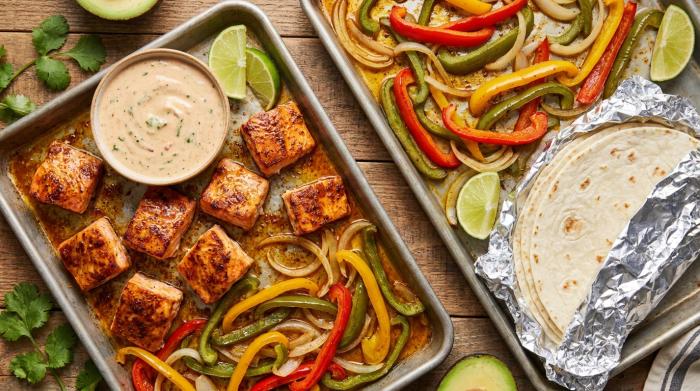
A complete family meal takes planning when time is short. Juicy 12-Minute Oven Baked Salmon Fajitas for Dinner solves the weeknight rush by cooking the fish and peppers on separate sheet pans at 465°F (240°C). The high heat quickly caramelizes the cubed fish while the vegetables soften alongside foil-wrapped tortillas.
The salmon
Cut the fillets into 1-inch (2.5 cm) cubes to increase the surface area for the spices. Size matters here. Fish cut thinner than 0.75 inches (2 cm) will overcook in the center before the outside browns.
You have a few options when buying fish for this meal:
- Frozen salmon works well if you thaw it completely. Pat the thawed fish dry so the extra moisture does not block the caramelization.
- Skin-on fillets are fine to use. The skin will not get crispy during the short bake time in the oven.
- Dense white fish can easily stand in for the salmon. Tilapia, halibut, snapper, mahi mahi, cod, flathead, and barramundi all work perfectly as replacements.
The baking pans
Start by heavily wrinkling pieces of aluminum foil.
Unfold the foil and cover the bottom of the pan used for the fish. The crinkled texture lifts the fillets off the flat metal. This texture stops the fish from sticking and prevents the undersides from getting wet and soggy.
Salmon Seasoning
Mix the olive oil, brown sugar, and spices together.
The paste needs a wet, thin consistency to coat the fish properly. A small amount of brown sugar helps the salmon brown in the oven without making the meat taste sweet. Regular paprika works as a substitute if you do not have smoked paprika.
Toss the raw cubes in the bowl until the paste covers every piece.
Move the cubes to the foil-lined tray. Leave empty space between every chunk. If you crowd the cubes on the sheet, they trap steam. The clear gaps let the salmon roast and take on color.
Vegetables
The vegetable mix combines red onions and three colors of bell peppers.
Spread the seasoned peppers and onions out flat on a separate pan. Green bell peppers provide a bitter note compared to the sweeter red and yellow varieties.
Tortillas
Divide the tortillas into two stacks. Wrap each pile tightly in aluminum foil.
Both corn and flour tortillas work for this meal. Do not set the wrapped stacks directly on the bottom of your oven if the lower heating coil is visible. Resting the foil parcels against an exposed bottom element will cause them to burn.
Baking the pans
Slide the fish tray onto the highest rack. Place the vegetable tray on the center rack.
Place the wrapped tortillas into the oven along with the sheet pans. You can rest the foil packages directly on the oven floor to warm them without occupying rack space, provided the bottom heating element is hidden. Baking at 465°F (240°C) cooks the fish quickly.
Sauce Options (Pick One)
You have enough time to prepare a condiment while the pans bake.
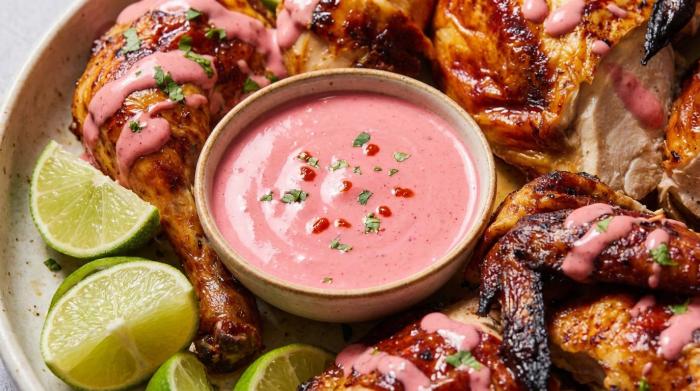
You can blend a fresh creamy jalapeno sauce or a pink taco sauce. Plain sour cream also works as a quick option.
For Serving
Bring all the components to the table.
Serve the ingredients deconstructed on a large platter. Set out the hot tortillas, sauce, avocado slices, and chopped cilantro. Portion three to four tortillas per person depending on their size. Diners can build their own meals from the hot tortillas, roasted vegetables, fish, and toppings.
Leftovers
Store any remaining fish and vegetables in sealed containers in the refrigerator. The cooked ingredients remain safe to consume for up to three days.
Weeknight Baked Salmon Fajitas on Two Sheet Trays
Ingredients
- 1.2 lb skinless salmon fillets, cut into 1-inch (2.5 cm) cubes
Salmon Seasoning
- 1 tsp tightly packed brown sugar
- 1.5 tbsp extra virgin olive oil
- 2 tsp smoked paprika, or regular paprika
- 1 tsp each garlic powder, onion powder, and cumin powder
- 0.5 tsp dried oregano
- 0.75 tsp kosher salt, halve if using table salt, double for flake salt
- 0.25 tsp cayenne pepper, optional
Vegetables
- 3 bell peppers (1 red, 1 yellow, 1 green), deseeded and cut into 1/3-inch (0.75 cm) strips
- 1 red onion, cut into 1/3-inch (0.75 cm) wedges
- 1 garlic clove, minced
- 1.5 tbsp extra virgin olive oil
- 0.5 tsp kosher salt
Sauce Options (Pick One)
- 1 batch Creamy Jalapeño Sauce
- 1 batch Pink Taco Sauce
- Sour cream
For Serving
- 12 taco-size tortillas, corn or flour, 3 to 4 per person, depending on size
- 1 avocado, sliced
- 2 tbsp roughly chopped cilantro, optional
- Lime wedges, optional
We may earn a small commission from grocery & equipment links, at no cost to you. Disclosure.
Method
Cooking
Serving
Substitutions
Dense fillets like flathead, snapper, tilapia, barramundi, or halibut are excellent substitutes for the salmon in this meal.
You can use skin-on salmon for this meal, but keep in mind that the short baking time will not be enough to render the skin crispy.
Storage
Any leftover salmon and bell peppers will remain safe to consume for up to three days when stored in the refrigerator.
Serving
Keep your heated tortillas wrapped in a clean kitchen towel at the table so they stay warm and pliable throughout the meal.
Squeeze fresh lime juice over the fish right before eating rather than during cooking to preserve the bright, acidic flavor.
Common mistakes
Avoid crowding the salmon on the baking sheet because trapping steam will prevent the exterior from caramelizing properly.
Do not place your foil-wrapped tortillas directly on the oven floor if you have an exposed bottom heating element because the foil parcels will burn.
Techniques
If you are using frozen salmon, ensure it is fully thawed and patted completely dry so excess moisture does not inhibit caramelization.
Baking the fish on crumpled aluminum foil elevates the cubes just enough to prevent sticking and keep the undersides from getting soggy.
Always cut bell peppers into uniformly sized strips so they roast evenly in the oven without the thinner pieces burning.
- Store
- Any leftover salmon and bell peppers will remain safe to consume for up to three days when stored in the refrigerator.
What kind of fish works best if I prefer not to use salmon?
Sturdy, pale fillets make an excellent substitute for this meal. You can swap out the salmon for tilapia or another thick, mild catch.
Do I have to remove the skin from my salmon fillets?
Cooking with skin-on salmon is perfectly fine. However, since the cubes only bake for 12 minutes, the skin will not crisp up.
How should I prepare frozen salmon before making these fajitas?
You can absolutely use frozen fillets, but make sure to thaw them completely first. Pat the fish entirely dry with paper towels so the excess moisture does not prevent the cubes from caramelizing in the oven.
Why is it important to cut the fish into 1-inch (2.5 cm) cubes?
Cutting the fish to this specific size increases the surface area so the Salmon Seasoning can coat more of the meat. If you cut the cubes thinner than 0.75 inches (2 cm), the center will overcook before the outside has a chance to brown.
What is the purpose of wrinkling the aluminum foil on the baking pan?
The crinkled texture creates small peaks that lift the fish slightly above the flat surface of the tray. This prevents the pieces from sticking to the pan and keeps the undersides from getting wet and soggy.
How can I tell when the fish is fully baked?
The easiest way to check for doneness is to gently prod a piece with a fork. It is ready when the center is opaque and the meat flakes apart easily.
Why didn't my salmon cubes caramelize in the oven?
This usually happens if the pieces are placed too close together on the baking sheet. You must leave a clear gap around every chunk so the heat can circulate, otherwise the trapped moisture will cause the fish to steam instead of roast.
Is it safe to put the foil-wrapped tortillas directly on the oven floor?
You can warm them on the oven floor to save rack space, but only if your bottom heating element is hidden. If your oven has an exposed bottom heating element, direct contact will burn the foil parcels.
How should I store any leftover salmon and vegetables?
Place any remaining fish and roasted peppers into sealed containers and keep them in the refrigerator. The cooked components will remain safe to eat for up to three days.
Can I freeze the cooked leftovers?
Freezing cooked fish and soft roasted vegetables is not generally recommended because their textures will become mushy upon thawing. It is best to enjoy the leftovers from the refrigerator within a few days.
What is the best way to keep the tortillas warm during dinner?
Once you take them out of the oven, keep your heated tortillas wrapped in a clean kitchen towel at the table. This traps the steam to ensure they stay warm and pliable throughout the meal.
Should I bake the salmon with lime juice?
Squeeze fresh lime juice over the fish right before eating rather than during cooking. Adding citrus at the table preserves the bright, acidic flavor.
Add a private note
Private to this device - jot your tweaks, swaps and timings. (Syncs to your account later.)
What to serve with it
See all →
You might also like
See all →
The Friday 3-recipe dinner plan 🧡
Every Friday: three tested weeknight dinners + one shopping list, ready to go. No spam, ever - unsubscribe anytime.