Vietnamese Sweet Pickled Carrots and Crunchy Daikon
Just two hours in a sweet vinegar brine turns raw vegetable matchsticks into a tangy batch of Vietnamese pickled carrots and daikon (radish).
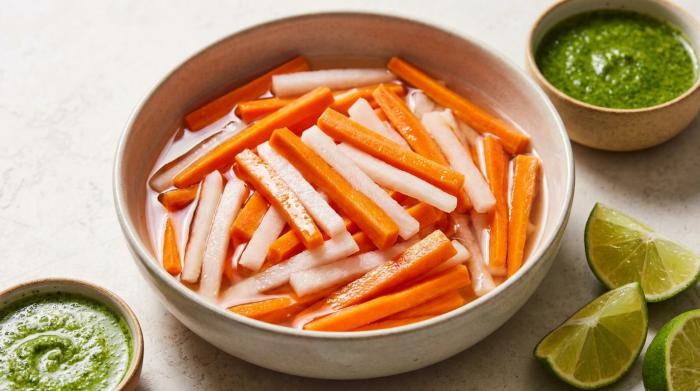
A batch of Vietnamese Sweet Pickled Carrots and Crunchy Daikon takes 2 hours to soak. You create the brine by stirring white sugar and salt into boiling water before pouring in rice wine vinegar. The resting sticks bend easily but stay crunchy, providing a bright topping for grilled meat dishes.
Preparing the vegetables
The Pickle Ingredients require precise cutting. Slice the peeled carrots and daikon radishes into batons about 1/10-inch (3 mm) thick. A sharp knife or a mandolin works best for this job. The thickness matters for the final texture. Thin pieces will go limp in the liquid. Thick chunks will stay too hard and resist the vinegar.
Shredding the vegetables might seem like a quick shortcut, but you should avoid using a standard metal grater. Scraping the carrots and daikon against those holes will destroy their crunch and result in a mushy texture.
You can change the ratio of carrot to daikon. The recipe works with any mix. You can also use extra carrots if you cannot find daikon radish at your local grocery store.
Mixing the brine
Boil your water before you mix the liquid. The high temperature dissolves the salt and sugar quickly. Stir the pitcher vigorously until the water turns clear. Granules left on the bottom will not flavor the vegetables properly. You must dissolve these dry ingredients completely before you pour in the vinegar.
Rice wine vinegar provides a mild acidity. Standard Western vinegars taste too harsh for this dish. You can substitute apple cider vinegar if you do not have rice wine vinegar in your pantry.
Soaking the sticks
Put the cut vegetables into the warm liquid. Press the sticks down firmly. The brine needs to crest the top of the vegetables to submerge them completely.
Leave the bowl alone for 2 hours. The raw sticks need time to steep. Carrots and daikon radishes maintain a crunchy texture after pickling. They do not turn completely soft. Pull out a piece after the time passes and bend it. The batch is ready when the stick bends without snapping and feels slightly floppy.
Meals to eat them with
Always drain the required amount of vegetables from the liquid before using. Shake off the excess liquid before you add them to your food. Wet sticks will turn your sandwich bread soggy.
These pickles belong inside sandwiches. They also add a crisp bite to lettuce wraps and rice paper rolls. You can serve a handful as a side for noodle bowls, rice bowls, and grilled meat dishes.
Refrigeration and glass containers
Pack the unused vegetables and their brine into glass containers fitted with airtight lids. Do not keep this batch in plastic tubs.
Check that the pickling liquid completely submerges the vegetables before closing the lids. Store the airtight glass containers in the refrigerator. The carrots and daikon will last there for a maximum of two months.
Vietnamese Sweet Pickled Carrots and Crunchy Daikon
Pickle Ingredients
- 2 medium carrots, peeled and cut into 1/10-inch (3 mm) batons
- 0.5 large daikon (white radish), peeled and cut to match the carrots
- 0.5 cup white sugar
- 0.75 cup rice wine vinegar, or apple cider vinegar
- 1.5 cup boiling water
- 4 tsp cooking or kosher salt
We may earn a small commission from grocery & equipment links, at no cost to you. Disclosure.
Method
Substitutions
You can change the ratio of carrot to daikon or use only carrots if the radish is unavailable, provided the Pickle Ingredients remain completely submerged in the liquid.
Apple cider vinegar is a great substitute if you do not have the milder rice wine vinegar for the brine.
Storage
Store your leftover Pickle Ingredients fully submerged in their liquid inside sealed glass jars instead of plastic containers for up to two months in the refrigerator.
Thoroughly cleaning glass storage jars with hot water before use helps prevent unwanted bacteria from spoiling homemade pickles.
Serving
Drain the Vietnamese Sweet Pickled Carrots and Crunchy Daikon thoroughly before using them as a bright topping for sandwiches, rice bowls, or grilled meats.
Common mistakes
Slice the carrots and daikon into 1/10-inch (3 mm) batons using a knife or a mandolin. Avoid shredding the vegetables on a standing metal grater, since that method eliminates their crispness and results in mushy pieces.
Techniques
Using a sharp mandoline slicer helps produce perfectly uniform vegetable matchsticks that will absorb the brine at the exact same rate.
Dissolving salt and sugar in hot liquid before adding the vinegar ensures a completely clear brine without any gritty granules settling at the bottom.
- Store
- Store your leftover Pickle Ingredients fully submerged in their liquid inside sealed glass jars instead of plastic containers for up to two months in the refrigerator. Thoroughly cleaning glass storage jars with hot water before use helps prevent unwanted bacteria from spoiling homemade pickles.
Can I use regular white vinegar instead of rice wine vinegar?
Standard Western vinegars taste too harsh for Vietnamese Sweet Pickled Carrots and Crunchy Daikon. It is best to stick with mild rice wine vinegar or use apple cider vinegar as a substitute.
Why are my carrot and daikon sticks still completely hard after soaking?
The vegetables were likely cut too thick to absorb the liquid properly. Ensure the Pickle Ingredients are sliced into batons no thicker than 1/10-inch (3 mm) so they become slightly floppy in the brine.
Why can I not store the Pickle Ingredients in a plastic container?
Avoid keeping the vegetables in plastic tubs. Pack the batons and their liquid into a glass container with a tight lid. When chilled in the refrigerator, the batch maintains its crunch for a maximum of two months.
Can I freeze these pickled vegetables to make them last longer?
Freezing is not recommended for quick pickled root vegetables. The freezing and thawing process destroys their delicate cell structure and leaves them mushy rather than crunchy.
Do I need to process these jars in a hot water bath?
No water bath canning is required for this method. These are quick refrigerator pickles, meaning they must be kept chilled and are not safe for room temperature pantry storage.
Should I serve quick pickles warm or cold?
While they soak in a warm brine initially, these types of pickles are almost always served chilled. Cooling them in the refrigerator maximizes their refreshing crunch.
Add a private note
Private to this device - jot your tweaks, swaps and timings. (Syncs to your account later.)
What to serve with it
See all →
You might also like
See all →

The Friday 3-recipe dinner plan 🧡
Every Friday: three tested weeknight dinners + one shopping list, ready to go. No spam, ever - unsubscribe anytime.