Toasted Sesame Beef Bibimbap with Crispy Fried Eggs
Marinating the sliced beef with grated apple keeps it tender while preparing separate vegetables builds distinct textures for this classic Bibimbap.
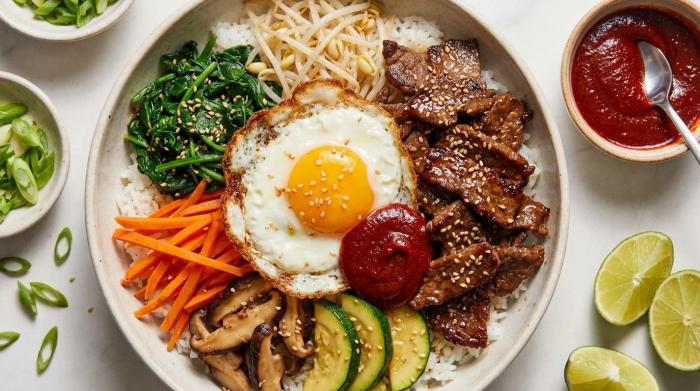
This Toasted Sesame Beef Bibimbap with Crispy Fried Eggs produces 4 bowls layered over cooked short grain rice. Incorporating grated green apple into the marinade tenderizes the beef. Salting the cut carrots and zucchini beforehand removes liquid, allowing you to cook each vegetable individually to maintain its unique texture.
Beef & Marinade
Slicing the beef tenderloin or thick steak as thinly as possible ensures it will cook rapidly in a hot skillet. To make paper-thin cuts easier, chill the meat in the freezer for 30 to 60 minutes until it becomes firm. You might also find extremely thin cuts of meat located in the frozen aisles of many international markets. Once sliced, the meat goes into a mixture of grated green apple, minced garlic, minced ginger, honey, soy sauce, and toasted sesame oil. Adding the grated apple helps tenderize the meat while contributing natural sweetness to the dish. If desired, you can easily exchange the beef for alternative proteins.
- Very thin slices of turkey, pork, or chicken
- Shrimp
- Flaked cooked fish
You can prepare the meat ahead of time. Freeze the raw beef directly in the marinade. The meat absorbs the flavors as it thaws. Use light or all-purpose soy sauce for the meat. Do not use dark soy sauce or sweet soy sauce. These varieties change the intended taste of the meal.
Vegetable Prep
Dried shiitake mushrooms deliver a more intense earthy flavor compared to fresh versions. Rehydrate the dried mushrooms by covering them in boiling water and letting them sit for 30 minutes. If you prefer using fresh shiitake or different fresh mushrooms, you can just skip that rehydration period entirely. Place the 2 x 0.2-inch (5 x 0.5 cm) carrot and zucchini batons in individual bowls to be salted. Letting these vegetables rest for 20 minutes prior to cooking will season them completely while drawing out unwanted moisture.
Cooking the Vegetables
You cook each vegetable separately in the skillet. This method maintains their distinct flavors and textures. The bean sprouts and spinach require a different approach. Simmer the sprouts in boiling water for five minutes. You can also steam them in the microwave for three minutes. Saute the chopped spinach with toasted sesame oil until the leaves wilt. Both greens hold a lot of water. Wait for them to cool down. Squeeze the excess moisture out with your hands.
This step stops the assembled dish from becoming watery. You can alter the vegetables based on what you have in the refrigerator.
- Substitute the carrots and zucchini with snow peas, green beans, bell peppers, asparagus, or broccolini.
- Swap the spinach and bean sprouts for Swiss chard, kale, sliced cabbage, or bok choy.
Spicy Bibimbap Sauce
The foundation for the Spicy Bibimbap Sauce begins with gochujang, an umami-rich paste made from red miso that brings heat to the bowl. Combine it in a small bowl with mirin, white sugar, grated garlic, light or all-purpose soy sauce, and rice vinegar, stirring until the sugar completely dissolves. The recipe also calls for toasted sesame oil, which lends a stronger flavor and darker brown color compared to untoasted yellow sesame oil. If needed, you can swap the rice vinegar out for apple cider vinegar or white wine vinegar.
Final Assembly
Short grain white rice acts as the traditional base for the bowls. Its sticky texture makes it easy to handle with chopsticks. Use any preferred variety of rice instead if you like. Place the warm cooked white rice into four serving bowls first. Arrange the prepared vegetables and warm beef over the rice. Place the toppings in alternating colors for visual contrast. Top each bowl with a fried egg cooked until the yolk is runny.
Serving and storage
Serve this meal at room temperature or slightly warm. Sprinkle the bowls with sesame seeds. Drizzle them with a little toasted sesame oil. Pour the spicy sauce over the top.
Break the runny egg yolk with a spoon.
Mix the assembled bowl thoroughly with the sauce immediately before eating. Prepared components keep well in the refrigerator for four to five days. The separate ingredients stay fresh. They are designed to be eaten at room temperature. This detail makes the meal well-suited for packed lunches.
Toasted Sesame Beef Bibimbap with Crispy Fried Eggs
Rice & Garnishes
- 4 eggs
- 4 cup cooked white rice, preferably short grain
- 2 tsp sesame seeds
Beef & Marinade
- 8 oz beef tenderloin or thick steak, very finely sliced
- 3 clove garlic, minced
- 1 tsp minced ginger
- 1 tbsp honey or brown sugar
- 2 tsp toasted sesame oil
- 0.25 green apple, grated using a box grater
- 1 tbsp light or all-purpose soy sauce
Vegetables
- 0.25 tsp fish sauce, or soy sauce
- 2 large carrots, cut into 2 x 0.2-inch (5 x 0.5 cm) batons
- 2 large zucchini, cut into 2 x 0.2-inch (5 x 0.5 cm) batons
- 1 bunch of spinach, cut into 2-inch (5 cm) lengths
- 8 large dried shiitake mushrooms
- 2 tsp minced garlic, about 3 cloves
- 0.25 tsp white sugar
- Toasted sesame oil, as needed
- 4 cup bean sprouts
- 8 tsp vegetable oil, separated
- 1.5 tsp light or all-purpose soy sauce
- 0.5 tsp salt
Spicy Bibimbap Sauce
- 1 clove garlic, finely grated
- 2 tbsp rice vinegar
- 3 tsp white sugar
- 2.5 tsp toasted sesame oil
- 4 tbsp gochujang paste
- 2 tbsp mirin
- 1.5 tsp light or all-purpose soy sauce
We may earn a small commission from grocery & equipment links, at no cost to you. Disclosure.
Method
Gochujang Sauce
Beef Preparation
Vegetable Prep
Cooking the Vegetables
Final Assembly
Substitutions
Feel free to swap the short grain white rice for any preferred variety of grain.
You can substitute the beef with thinly sliced chicken, turkey, pork, shrimp, or flaked cooked fish.
Snow peas, bell peppers, broccolini, green beans, and asparagus all work as replacements for the zucchini and carrots.
Storage
Prepared components can be stored in the refrigerator for four to five days and make wonderful packed lunches since they are meant to be eaten at room temperature.
You can freeze the raw beef directly in the marinade so it absorbs the savory flavors as it thaws.
Serving
Arrange the vegetable toppings over the rice in alternating colors for visual contrast and thoroughly mix everything together with the Spicy Bibimbap Sauce right before eating.
Common mistakes
Avoid using dark soy sauce or sweet soy sauce because they will significantly alter the intended flavor profile.
Be sure to thoroughly squeeze the excess moisture from the cooked spinach and bean sprouts so your final bowl does not become watery.
Techniques
Try freezing the beef for 30 to 60 minutes to firm the meat up and allow for paper-thin slicing.
Cooking each vegetable separately ensures they all maintain their distinct flavors and beautiful textures.
Ensure your skillet is thoroughly preheated before adding the thinly sliced meat so it sears quickly rather than steaming in its own juices.
Rinse your uncooked rice under cold running water until the liquid turns clear to remove excess surface starch and achieve a fluffier texture.
- Store
- Prepared components can be stored in the refrigerator for four to five days and make wonderful packed lunches since they are meant to be eaten at room temperature. You can freeze the raw beef directly in the marinade so it absorbs the savory flavors as it thaws.
What can I use if I do not have rice vinegar for the Gochujang Sauce?
You can easily replace the rice vinegar with an equal amount of apple cider vinegar or white wine vinegar.
Do I need to heat up the entire bowl if I am taking leftovers to work?
No, the prepared vegetable components are actually designed to be eaten at room temperature. You only need to quickly reheat the beef right before serving if you prefer it warm.
How should I eat the assembled bowl?
For the best flavor, break the runny egg yolk with your spoon and mix all the rice, vegetables, and meat thoroughly with the Gochujang Sauce immediately before taking your first bite.
Can I use dark or sweet soy sauce in the Beef Preparation?
No, you should stick to light or all-purpose soy sauce. Using dark or sweet soy sauce will drastically alter the intended flavor profile of the meat.
Why do I need to let the carrots and zucchini sit in salt before cooking?
Salting the batons and letting them rest for 20 minutes seasons the vegetables completely. It also draws out excess liquid so they saute properly in the skillet instead of steaming.
Why is my sliced beef steaming in the pan instead of browning?
This usually happens if the pan is not hot enough before the meat goes in. Always wait until your skillet is completely hot so the thin slices sear quickly instead of cooking in their own juices.
What is the best type of pan to use for frying the eggs?
Using a well-seasoned cast iron skillet or a nonstick pan is the most reliable way to achieve eggs with perfect runny yolks and crispy edges.
Add a private note
Private to this device - jot your tweaks, swaps and timings. (Syncs to your account later.)
What to serve with it
See all →



You might also like
See all →




The Friday 3-recipe dinner plan 🧡
Every Friday: three tested weeknight dinners + one shopping list, ready to go. No spam, ever - unsubscribe anytime.