Silky and Buttery Pea Puree for Roast Meat and Fish
This bright green pea puree takes only a few minutes on the stove and provides a silky, buttery base for roasted meats or fish.
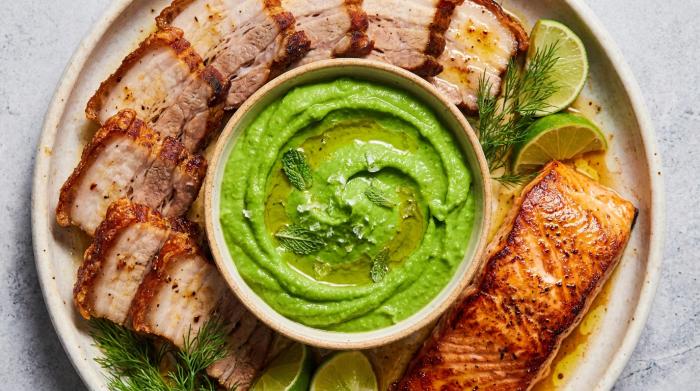
A bright green smear of pea puree makes a striking base for roasted meats or fish. The side dish doubles as a sauce, and 2 pounds (1 kg) of snap-frozen peas blend into a smooth paste after just a few minutes on the stove. Butter and aromatics build the foundation without covering up the delicate vegetables.
The peas
The snap-freezing process preserves the natural sugars in peas right after harvest. You can use standard frozen peas straight from the bag for a fast preparation. Freshly podded peas also work in place of the frozen variety if you have them available. The dish relies on the inherent sweetness of the peas rather than heavy seasoning.
The aromatics
The recipe starts by melting 8 tablespoons (125 g) of unsalted butter in a pot over medium heat. Two sliced shallots (eschalots) and two cloves of minced garlic go into the melted butter to soften. You cook the aromatics for three minutes and watch the pot closely. The garlic and shallots (eschalots) must stay soft and pale, because toasted notes will alter the intended mild taste.
After the vegetables soften, pour the frozen peas and 2 cups of broth into the pot. Use low-sodium chicken broth if you are serving meat, or use vegetable broth if the puree is for fish. Turn the stove dial up to bring the liquid to a bubble.
The cooking liquid
Put a lid on the pot and turn the heat down to medium. Simmer the mixture for two minutes to heat the peas through. Before moving anything to the blender, scoop out 1/3 cup of the hot cooking liquid and set it aside. You keep this broth to manually adjust the final thickness later.
Transfer the peas and all the remaining liquid from the pot into your blender. If you plan to serve the dish with lamb, drop in a small handful of optional mint leaves. Blend the mixture on high for one minute to break down the peas.
The texture
The blender breaks the peas down quickly, but a fine metal strainer provides a refined texture. Set the strainer over a large bowl. Pour the blended mixture into the strainer and press it through the mesh with a rubber spatula. This technique catches thick skins and leaves a soft, silky paste in the bowl.
Pour the reserved hot liquid back into the puree a little at a time. Stir the mixture and check the consistency. Stop when the puree drops easily from a spoon. Mix in 0.25 teaspoon of salt and 0.125 teaspoon of white pepper. Heavy seasoning masks the natural sweetness of the dish.
Plating the dish
Serve the dish warm as a combined side dish and sauce. You can place the puree in a communal bowl for the table to share.
For a plated meal, dollop and smear the puree directly onto individual plates to form a bed for the main protein. The subtle taste supports heavy dishes like a sliced rack of lamb or roast pork, and it also pairs cleanly with baked chicken or pan-fried salmon.
Silky and Buttery Pea Puree for Roast Meat and Fish
Ingredients
- 2 cup low-sodium chicken or vegetable broth, use vegetable broth if the puree is for fish
- 2 lb frozen peas
- 2 clove garlic, minced
- 2 medium shallots (eschalots), thinly sliced
- 8 tbsp unsalted butter
- 0.25 tsp salt
- 0.13 tsp white pepper
- 1 small handful mint leaves, optional
We may earn a small commission from grocery & equipment links, at no cost to you. Disclosure.
Method
Substitutions
You can use freshly podded peas in place of the frozen ones, though frozen peas work beautifully because they are snap-frozen at peak ripeness.
Serving
Pair this warm puree as a combined side dish and sauce for baked chicken, pan-fried salmon, roast pork, or a rack of lamb.
Include the optional mint leaves in the blender if you are preparing this dish to serve alongside lamb.
Common mistakes
Watch the pot carefully to ensure the garlic and shallots (eschalots) do not turn golden or brown, which would alter the sweet flavor profile.
Keep your salt and white pepper additions extremely light to avoid masking the naturally subtle and sweet flavor of the peas.
Techniques
Use a rubber spatula to press the blended mixture through a fine mesh strainer to achieve an incredibly silky and refined texture.
When blending hot liquids in a standard blender, remove the center cap from the lid and cover the hole lightly with a folded kitchen towel to let steam escape safely.
Pause your blender halfway through processing to scrape down the sides with a spatula so everything purees evenly.
Can I use fresh peas instead of frozen ones for this Silky and Buttery Pea Puree for Roast Meat and Fish?
Yes, you can use freshly podded peas if you have them available. However, standard frozen peas work beautifully because they are snap-frozen at peak ripeness to preserve their natural sugars.
Will the flavor change if the garlic and shallots (eschalots) catch and darken in the pan?
If these aromatics pick up color, toasted notes will arrive and that alter the intended mild taste of the dish. Watch the pot closely during the first three minutes to keep them soft and pale, which protects the naturally sweet flavor profile.
Do I have to push the mixture through a strainer?
Straining is highly recommended for the best results. Using a rubber spatula to press the blended peas through a fine metal strainer catches any thick skins and creates an incredibly refined, silky texture.
What should I serve with this puree?
The puree serves as a combined side dish and sauce, creating a smooth base for hearty mains such as a rack of lamb or roast pork. It matches just as well with milder proteins like pan-fried salmon or baked chicken. If you plan to serve it with lamb, add the optional mint leaves to the blender with the peas.
Does it matter which type of broth I use?
The choice of broth depends on the main course you plan to serve. Use low-sodium chicken broth if you are serving meat, but switch to vegetable broth if you are pairing the puree with fish.
How do I safely blend hot liquids?
When blending hot ingredients, remove the center cap from the blender lid and cover the hole lightly with a folded kitchen towel. This allows steam to escape safely and prevents pressure from building up inside the pitcher.
Why does my blender leave some chunks behind?
Blenders can sometimes miss bits of food that get stuck on the walls of the pitcher. Pause your machine halfway through processing to scrape down the sides with a spatula so everything purees evenly.
Can I make vegetable purees ahead of time and freeze them?
Yes, most smooth vegetable purees freeze very well for up to a few months in an airtight container. When you are ready to use it, thaw the mixture in the refrigerator overnight and reheat it gently on the stove, stirring well to bring back its smooth texture.
Add a private note
Private to this device - jot your tweaks, swaps and timings. (Syncs to your account later.)
What to serve with it
See all →

You might also like
See all →
The Friday 3-recipe dinner plan 🧡
Every Friday: three tested weeknight dinners + one shopping list, ready to go. No spam, ever - unsubscribe anytime.