

Golden, Crusty No-Knead Cheese Bread in a Dutch Oven
A preheated pot holds the steam to build a thick crust on this Cheese bread (no knead!), while the center stays soft and full of melted Colby.
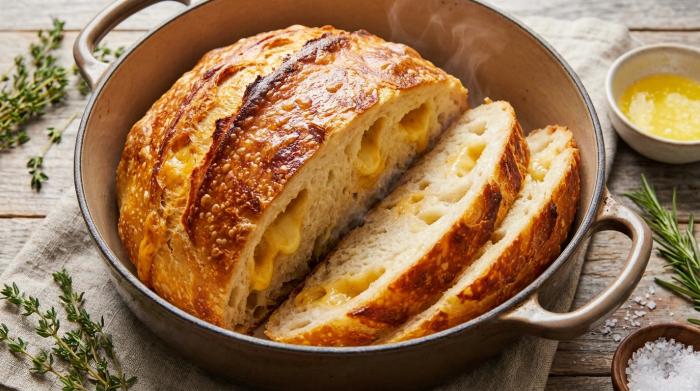
A hot cast iron pot traps steam to build a thick, crackly crust on this Golden, Crusty No-Knead Cheese Bread in a Dutch Oven. You just stir the flour, yeast, salt, and water together, wait two to three hours for the dough to double, and fold freshly grated Colby cheese inside before baking at 450°F (240°C).
Quick Summary Method
For a rapid overview, mix the dry ingredients together, then mix in the water. Let the dough rise for two to three hours until doubled. Preheat your pot to 450°F (240°C). Turn the dough out onto your counter. Fold the cheese inside, flip the dough over, and mound more cheese on top. Bake the dough covered for 35 minutes. Take the lid off the pot and bake uncovered for 10 minutes. Let the loaf rest for 10 minutes before you eat.
Flour and yeast
Bread flour creates a highly elastic dough and a chewy crumb because it has a high protein content. You can replace the bread flour with all-purpose flour to produce a slightly less chewy loaf. Instant yeast requires no blooming. You mix it directly into the dry ingredients. Active dry yeast works in its place if you dissolve it in a portion of the warm water first.
Water around 95°F (35°C) activates the yeast optimally. Boiling water kills the yeast entirely. Lukewarm water slows down the yeast activation and delays the proofing time.
Choosing the cheese
Colby cheese melts softly into the crumb without releasing excessive grease. Using 2.5 cups (250 grams) of cheese provides the right flavor and keeps the loaf structurally sound. You must use freshly grated cheese. Freshly grated cheese melts smoothly and prevents the dough from being weighed down. Store-bought pre-shredded cheese often inhibits the dough's rise.
Cheddar, Monterey Jack, or Gruyere serve as direct alternatives to Colby cheese. Mozzarella melts well, but it lacks sufficient flavor for this recipe.
Detailed Method: Dough
Mix the flour, salt, and yeast together in a large bowl, then add the water. Stir the dough with the handle of a rubber spatula. The sticky mixture will not adhere to the plastic or wooden handle.
The mass will be extremely tacky. Cover the bowl and let the dough rest for two to three hours. A slightly warmed, empty dryer creates a draft-free environment for this step. The dough is done when it grows to twice its original size, displays a bubbly top, and wobbles when shifted.
Do not let the dough triple in volume. Over-proofed dough causes the baked loaf to collapse. If you want to bake the next day, you can refrigerate the unbaked artisan dough overnight to develop complex flavors.
Detailed Method: Shaping
Dust your counter lightly with a little flour, then scrape the dough onto it and press it gently into an 8-inch (20cm) flat circle.
Cover the dough surface with two-thirds of your cheese.
Fold the edges of the dough toward the center four times. These inward folds deflate large air bubbles and evenly distribute the cheese filling.
Leave the final outside layer completely bare. A cheese-free bottom creates a solid base for the loaf. Turn the dough over so the folded seams sit mostly on the bottom.
Pile the reserved cheese high over the smooth top.
Detailed Method: Baking
Put a heavy-bottomed pot into the oven 30 minutes before the proofing finishes. Preheat the pot to 450°F (240°C). A hot pot creates an immediate oven-spring effect when you add the dough. Transfer the dough into the pot using the parchment paper.
Put the lid on and bake the dough covered for 35 minutes. The lid traps steam to cook the interior before the crust hardens.
Remove the lid from the pot. Bake the bread uncovered for another 10 minutes to brown the crust. If you do not have a Dutch oven, you can place a metal pan of boiling water alongside a baking tray to replicate the steam effect. Never use a glass pan for this makeshift method. A glass dish can shatter in the hot oven.
Cooling and leftovers
Take the pot out of the oven. Lift the bread out and peel off the paper. Let the loaf cool on a wire rack for 10 minutes or longer.
This wait helps the center set. If you slice the bread before it rests, the crumb becomes gummy and raw.
Serve the bread plain or spread it with butter.
The baked bread remains fresh at room temperature for 24 to 36 hours. Older slices benefit from toasting to melt and crisp the incorporated cheese.
Golden, Crusty No-Knead Cheese Bread in a Dutch Oven
Ingredients
- 3 cup bread flour
- 2 tsp instant yeast
- 1.5 cup very warm tap water
- 2.5 cup tightly packed freshly shredded Colby cheese
- 1.5 tsp kosher salt
We may earn a small commission from grocery & equipment links, at no cost to you. Disclosure.
Method
Quick Summary Method
Detailed Method: Dough
Detailed Method: Shaping
Detailed Method: Baking
Substitutions
You can swap the bread flour for all-purpose flour, though the resulting loaf will be slightly less chewy.
Cheddar, Monterey Jack, or Gruyere make excellent alternatives to Colby, but avoid mozzarella because it lacks enough flavor for this recipe.
Storage
You can refrigerate the unbaked dough overnight to develop more complex flavors before shaping and baking.
The baked bread stays fresh at room temperature for 24 to 36 hours, and older slices toast beautifully to melt and crisp the cheese.
Common mistakes
Make sure your tap water is around 95°F (35°C), because lukewarm water slows proofing and boiling water will completely kill the yeast.
Do not let the dough rise until it triples in volume, as over-proofing will cause the baked bread to collapse.
Resist the urge to slice the bread before the required 10 minute rest, otherwise the center crumb will remain gummy and taste raw.
Techniques
Try mixing the wet dough with the handle end of a rubber spatula to prevent the sticky mass from adhering to your tool.
Letting freshly baked bread cool on a wire rack prevents the bottom crust from getting soggy from trapped steam.
Always use a serrated knife when slicing crusty artisan bread to avoid crushing the delicate interior crumb.
- Store
- You can refrigerate the unbaked dough overnight to develop more complex flavors before shaping and baking. The baked bread stays fresh at room temperature for 24 to 36 hours, and older slices toast beautifully to melt and crisp the cheese.
How do I modify the ingredients if I only have active dry yeast?
You can easily substitute active dry yeast for the instant yeast in this recipe. You just need to dissolve it in a portion of the 1.5 cups of very warm tap water first before mixing it into your flour and salt.
Why is it important to grate the Colby cheese myself?
Freshly grated cheese melts softly and smoothly into the crumb without releasing excessive grease. Store-bought pre-shredded cheese can inhibit the dough's rise and weigh the final bread down.
Why do I need to fold the dough inward when shaping the Golden, Crusty No-Knead Cheese Bread in a Dutch Oven?
Bringing the edges toward the center four times deflates the large pockets of air inside the wet dough. This process also ensures the shredded cheese filling is evenly distributed throughout the loaf.
How can I achieve the same crust if I do not own a heavy-bottomed pot?
You can replicate the steam effect of a covered pot by placing a metal pan of boiling water alongside a baking tray in your oven. Never use a glass dish for this makeshift method, as the intense heat can cause it to shatter.
Can I freeze fully baked artisan bread?
Yes, crusty loaves freeze beautifully for longer-term storage. Wait until the bread is completely cool, wrap it tightly in plastic or foil to prevent freezer burn, and thaw it at room temperature before eating.
What is the best way to slice crusty bread without crushing it?
Always use a serrated knife and let the blade do the work with a gentle sawing motion. Pressing down too hard with a straight-edged blade will compress the delicate interior crumb.
Why does bread need steam when baking?
Steam keeps the dough's surface flexible during the first portion of baking so it can expand fully in the oven without tearing. Once the steam evaporates, the dry heat is able to form a thick, crackly crust.
Add a private note
Private to this device - jot your tweaks, swaps and timings. (Syncs to your account later.)
What to serve with it
See all →





You might also like
See all →


The Friday 3-recipe dinner plan 🧡
Every Friday: three tested weeknight dinners + one shopping list, ready to go. No spam, ever - unsubscribe anytime.