Quick Stovetop Soft Flatbread (No Yeast)
The warm milk and melted butter make a pliable dough for this Soft Flatbread (No Yeast), so you can skip the wait for rising.
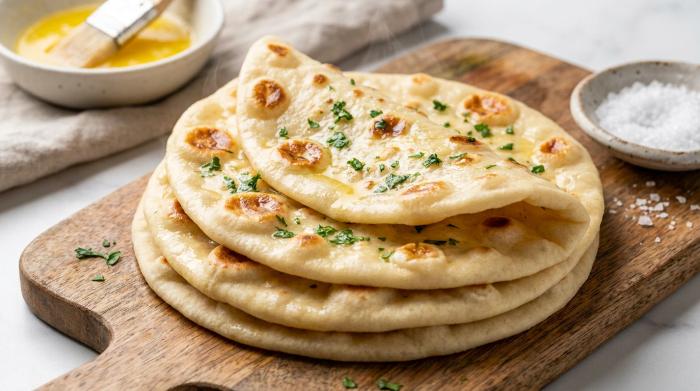
You can skip the long wait for yeast and still make pliable sandwich wraps. Warm milk and melted butter loosen the dough for this Quick Stovetop Soft Flatbread (No Yeast). The method takes less than an hour to yield six soft 8" (20 cm) rounds ready for folding around heavy fillings.
The dough
Combine the butter and milk in a small pot. Heat the liquids just until the butter completely melts.
In a large bowl, mix two cups of the plain flour (all-purpose) and the salt. Pour in the warm milk mixture and stir everything together. Sprinkle some flour on your counter. Turn the dough out and knead it for two minutes. You want the dough to feel smooth under your hands. Add a little extra flour if the mixture seems sticky.
Wrap the dough in plastic wrap. Let the dough rest on the counter for 30 minutes. This rest period relaxes the gluten so the dough rolls easily.
Rolling the rounds
Unwrap the rested dough and cut it into six even pieces. Roll each piece between your hands into a smooth ball. Put a thick coating of flour on your counter. Flatten each dough ball with a rolling pin into a round measuring 8" (20 cm) across and about 2 to 3 mm thick.
You must keep the raw dough separated if you roll all the pieces before cooking. Do not stack raw dough rounds with only flour between them. This mistake causes the pieces to fuse together. Separate pre-rolled raw dough rounds with parchment paper or plastic wrap.
The skillet
Turn the heat to high under a dry nonstick skillet. Do not add any oil to the pan. Lay one dough round flat in the hot pan.
Cook the dough for 1 to 1.5 minutes. Watch for the flatbread to bubble up high and develop deep brown spots underneath. Flip the dough over. Cook the second side for 45 seconds to 1 minute. You will see it bubble up once more and show golden spots.
Watch your pan temperature as you work through the batch. Do not cook the flatbread over excessively high heat. Too much heat creates a brittle exterior crust that will crack when rolled.
Softening the crust
Place the finished rounds into a stack on a plate. You must keep the stack wrapped in a clean tea towel. The towel traps steam and keeps the bread soft.
Do not skip the towel wrap. You must cover the cooked breads to protect them from dry air. An exposed surface becomes dry and less pliable.
Flour and dairy choices
You can change the base ingredients to suit your diet or pantry.
- Flour made from the entire wheat grain serves perfectly well as a direct base for the dough.
- Gluten-free flour blends create a chewier texture and may require additional dusting flour to prevent sticking during rolling.
- Substitute almond milk for dairy milk to create a completely vegan dough.
- To remove dairy, substitute coconut oil or olive oil for the butter.
Avoid almond flour for this recipe. Almond flour lacks the necessary structure and will not work for this preparation.
Toppings and fillings
You can brush the warm flatbreads with plain olive oil or melted butter. Top the cooked breads with a mixture of melted butter and minced garlic instead of plain oil for a different finish.
Fold these flexible rounds around souvlaki, shawarma, or gyro meat. They also function perfectly as a scoop for wet meals. Serve the warm flatbread alongside a hearty lentil stew, a spicy vegetable curry, or a saucy beef dish for dipping.
Leftovers
Raw dough can be stored in the refrigerator for up to three days. Fully cooked flatbreads freeze exceptionally well for long-term storage.
Quick Stovetop Soft Flatbread (No Yeast)
Ingredients
- 3.5 tbsp (1.75 oz / 50 g) unsalted butter
- 0.75 cup milk
- 0.5 tsp salt
- 2 cup plain flour (all-purpose), unsifted and unpacked, plus 1/4 cup extra for dusting and adjusting
For finishing
- Olive oil, melted butter, or minced garlic, optional
We may earn a small commission from grocery & equipment links, at no cost to you. Disclosure.
Method
Substitutions
You can substitute wholemeal flour directly for the plain flour. Gluten-free blends also work but create a chewier texture and might need extra dusting flour so the dough does not stick. Almond flour lacks the required structure and will not work.
You can create a completely vegan dough by swapping the butter for coconut or olive oil and using almond milk in place of standard milk.
Storage
Store raw dough in the refrigerator for up to three days, or freeze the fully cooked flatbreads for longer storage.
If you pre-roll the dough rounds, separate them with parchment paper or plastic wrap because flour alone will not prevent them from fusing together.
Serving
Use these pliable breads for gyro, shawarma, or souvlaki wraps, or serve them alongside wet dishes like butter chicken and beef rendang.
Common mistakes
Avoid cooking the dough over excessively high heat, as this creates a brittle exterior crust that will crack when rolled.
Do not leave the freshly cooked flatbreads uncovered on the plate, as wrapping them in a clean tea towel traps steam and keeps them soft.
Techniques
Letting the wrapped dough rest on the counter for thirty minutes is crucial because it relaxes the gluten and makes rolling much easier.
Lightly dust your rolling pin with flour to prevent the dough from sticking and tearing as you flatten it.
Ensure your nonstick skillet is fully preheated before adding the dough so the bread immediately begins to puff and develop spots.
- Store
- Store raw dough in the refrigerator for up to three days, or freeze the fully cooked flatbreads for longer storage. If you pre-roll the dough rounds, separate them with parchment paper or plastic wrap because flour alone will not prevent them from fusing together.
Can I use a different flour to make this Quick Stovetop Soft Flatbread (No Yeast)?
Yes, you can substitute whole grain flour directly for the plain base. A gluten-free blend is also an option that yields a chewier flatbread, though you might need extra dusting flour to keep the dough from sticking as you roll it. Almond flour will not work here because it cannot provide the required structure.
How can I make this dough dairy-free or vegan?
Making a completely vegan dough requires swapping the regular milk for almond milk. For the fat, use coconut oil or olive oil instead of butter.
Can I make the dough ahead of time?
Yes, raw dough can be stored in the refrigerator for up to three days. If you choose to roll the dough rounds out before storing them, you must separate the pieces with parchment paper or plastic wrap because flour alone will not prevent them from fusing together.
Can I freeze the cooked flatbreads?
Yes, the fully cooked flatbreads freeze exceptionally well for long-term storage.
What should I serve these flatbreads with?
Because the cooked rounds stay flexible, you can wrap them around heavy fillings including souvlaki, shawarma, and gyro meat. They also work perfectly for dipping into wet meals, so try serving them alongside beef rendang, butter chicken, and chickpea curry.
Why did my flatbread crack when I tried to fold it?
Cooking the dough over excessively high heat creates a brittle exterior crust that will crack when rolled. Cracking can also happen if you leave the freshly cooked flatbreads exposed on a plate, so always keep them wrapped in a clean tea towel to trap steam and maintain softness.
Do I need to oil the pan before cooking?
No, you should turn the heat on high under a completely dry nonstick skillet. Do not add any oil or butter to the pan during the cooking process.
How do I keep the dough from sticking to my rolling pin?
Lightly dust your rolling pin with flour to prevent the dough from sticking and tearing as you flatten it.
Why should I preheat the pan before cooking flatbread?
Ensure your nonstick skillet is fully preheated before adding the dough so the bread immediately begins to puff and develop spots.
Add a private note
Private to this device - jot your tweaks, swaps and timings. (Syncs to your account later.)
What to serve with it
See all →
You might also like
See all →
The Friday 3-recipe dinner plan 🧡
Every Friday: three tested weeknight dinners + one shopping list, ready to go. No spam, ever - unsubscribe anytime.