Double-Fried Crispy French Fries
A quick boil in vinegar water keeps these crispy French fries fluffy inside, while a two-stage fry locks in a shattering crust.
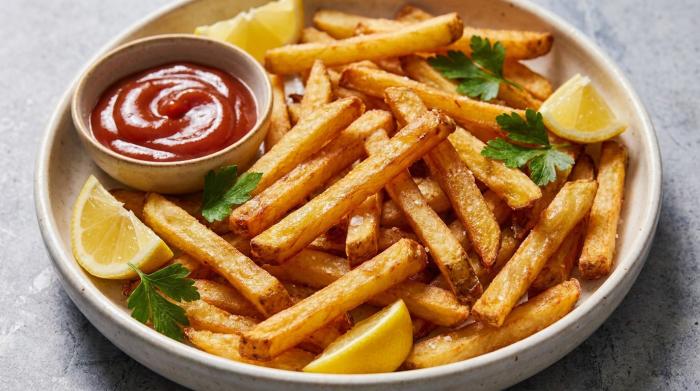
Double-Fried Crispy French Fries rely on a vinegar bath and a two-stage frying process to build a crisp crust around a fluffy center. The initial boiling step activates surface starches. The whole process takes time, but hitting the 400°F (205°C) frying temperature twice creates a rigid golden exterior.
Choosing and cutting potatoes
Select floury and starchy potatoes such as Russet, Sebago, Maris Piper, or King Edward to ensure a fluffy interior and crisp exterior. Waxy potatoes retain too much moisture to crisp up properly. Peel the raw potatoes and slice them into 1/4 inch (6 mm) sticks. Placing two or three potato slices in a stack helps produce uniform baton cuts. Slicing them with a bread knife leaves a textured surface on each piece, which promotes crispier edges.
Keep the cut potatoes submerged in water. The water stops them from turning brown while you finish cutting the remaining pieces.
Rinse the raw cut potatoes in a strainer for 15 to 20 seconds. The running water removes excess surface sugars that cause premature browning during frying.
The boiling stage
Drop the rinsed potatoes into a cooking vessel and cover them with 2 quarts (2 litres) of unheated tap water. Stir in 2 tablespoons of distilled white vinegar and 1 tablespoon of cooking salt or kosher salt. If you prefer, 2 teaspoons of table salt can be swapped for the cooking salt in the water. The distilled white vinegar plays a crucial role by keeping the pieces intact so they do not fall apart during the ten-minute blanching step.
Bring the pot to a boil over high heat, then reduce the stove to low. You want a gentle ripple. A rapid boil will cause the potatoes to break apart. A 10-minute simmer activates the surface starches you need to develop a crisp crust.
Remove the cooked potatoes and spread them across two racks or a clean towel.
Let them steam dry on the counter for 5 minutes. The residual heat dries excess moisture without the need to pat them down.
The first fry
Canola or vegetable oil provides a neutral base suitable for high-heat frying. Pour the oil into a deep pot measuring at least 4 inches (10 cm) high. The liquid should sit 1.2 inches (3 cm) deep. You need 3 inches (7 cm) of clearance at the top to prevent dangerous spillovers.
Heat the oil to 400°F (205°C) over medium high heat. Separate the uncooked potatoes into three batches. A full batch dropped into the hot oil at once causes rapid and hazardous bubbling.
Add one third of the first batch, wait 10 seconds, add another third, wait 10 seconds, and add the rest. Fry the potatoes for 50 seconds. Move the pieces around once or twice.
Take the potatoes out and divide them between two trays lined with paper towels. The fries will look pale and limp right now.
Bring the oil back to 400°F (205°C) and cook the remaining two portions the exact same way. Give the potatoes 30 minutes to cool.
The second fry
Heat the oil once more until it reaches 400°F (205°C). Split the cooled potatoes into two equal halves. Carefully lower one portion into the deep pot and let the pieces cook for 4 minutes.
Move the pieces around two times while they cook until they turn crispy and golden brown. Drain the hot french fries in a large bowl lined with paper towels. A bowl retains heat better than a flat tray while you prepare the second batch. Fry the remaining potatoes the same way.
Seasoning and serving
The boiling water seasons the potatoes internally, so they require less topical salt. Fine table salt or sea salt flakes adhere better to the finished potatoes than large-grained kosher salt. You can apply a Seasoning (choose one) immediately. Options include Table salt or sea salt flakes, Shaker fries seasoning, Rosemary salt, or Nori salt (coming soon). Toss everything well in the bowl and serve the fries right away.
To ensure all the potatoes reach the table hot when making big quantities, drop the completed batches back into the oil together for up to one minute. This brief final dunk reheats everything simultaneously just before serving.
Storing oil and freezing fries
You can cool the frying oil, store it in jars without straining, and reuse it three to four times. You can also freeze the potatoes after the first fry. Cool them completely and freeze them in a single layer before transferring them to an airtight container. You can fry these frozen first-fried potatoes directly from the freezer for four and a half minutes at 400°F (205°C).
Double-Fried Crispy French Fries
Ingredients
- 2 lb (3 - 4) floury potatoes, Aus: Sebago/dirt aka brushed, US: Russet/Idaho, UK: Maris Piper, King Edward
- 2 tbsp white vinegar
- 1 quart canola or vegetable oil
- 1 tbsp cooking salt or kosher salt
Seasoning (choose one)
- Table salt or sea salt flakes
- Shaker fries seasoning
- Rosemary salt
- Nori salt, coming soon
We may earn a small commission from grocery & equipment links, at no cost to you. Disclosure.
Method
Fry #1
Fry #2
Season & serve!
Substitutions
Choose floury potatoes like Russets or Idaho varieties because waxy potatoes retain too much moisture to achieve a crisp texture.
You can substitute two teaspoons of table salt for the standard cooking salt in the boiling water.
Storage
Cool the first-fried potatoes completely and freeze them in a single layer to store, then fry them directly from the freezer for four and a half minutes when you are ready to eat.
The frying oil can be safely cooled, stored in jars without straining, and reused three to four times.
Serving
Use fine table salt or sea salt flakes for your Seasoning (choose one) because smaller grains adhere much better to the finished potatoes than large kosher salt crystals.
Common mistakes
Maintain a gentle simmer rather than a rapid boil during the initial cooking step to prevent the potatoes from breaking apart in the water.
Stagger the addition of the potatoes into the hot oil instead of dropping a whole batch at once to prevent rapid and hazardous bubbling.
Techniques
Slice the potatoes using a blade with teeth, such as a bread knife, to leave a rough finish on the cut pieces that fries into significantly crunchier edges.
Rinse the raw cut potatoes thoroughly to wash away excess surface sugars that cause premature browning during frying.
Always use a deep, heavy-bottomed pot for deep-frying to maintain a steady temperature and safely contain any sudden bubbling.
Keep a designated slotted spoon or wire spider handy to safely retrieve cooked items from hot oil while letting excess grease drip away.
- Store
- Cool the first-fried potatoes completely and freeze them in a single layer to store, then fry them directly from the freezer for four and a half minutes when you are ready to eat. The frying oil can be safely cooled, stored in jars without straining, and reused three to four times.
Can I use red or waxy potatoes instead of Russets?
No, waxy potato varieties retain too much moisture to achieve a crisp texture. You need to use floury and starchy potatoes like Russets or Idaho to create fluffy interiors and a rigid crust.
Why did my potatoes break apart in the water?
You likely boiled the water too rapidly instead of maintaining a gentle simmer. Make sure the liquid barely moves to keep the batons intact during the ten-minute blanching process.
Do I need to pat the boiled potatoes dry with a paper towel?
No, simply spread the cooked potatoes across two racks and let them steam dry on the counter for 5 minutes. The residual heat naturally evaporates the excess moisture without any patting required.
How do I prepare these ahead of time for a gathering?
You can freeze the Double-Fried Crispy French Fries after their initial 50-second fry. Cool them completely, freeze them in a single layer, and fry them directly from the freezer for four and a half minutes at 400°F (205°C) when you are ready to eat.
How can I ensure all the batches are hot when it is time to eat?
Should the first rounds cool down before the last ones finish cooking, return all the fully completed batches to the hot oil together for up to one minute. This rapid reheat ensures every portion reaches the table hot at the exact same time.
Why did the hot oil violently bubble over the pot?
You likely dropped an entire portion of potatoes into the hot oil at once, or your cooking vessel lacked the required 3 inches (7 cm) of clearance at the top. Always stagger the addition of your uncooked potatoes to prevent hazardous bubbling.
Why does fried food sometimes turn out heavy and greasy?
Frying in oil that is too cold causes the food to absorb excess grease before an exterior crust can form. Always use a deep-fry thermometer to monitor the heat and let the oil recover its temperature between batches.
What is the safest way to dispose of old cooking oil?
Allow the liquid to cool entirely in your heavy-bottomed pot, transfer it to a disposable sealable container, and throw it in the regular garbage. You should never pour cooking oil down the drain because it will solidify and clog your pipes.
Add a private note
Private to this device - jot your tweaks, swaps and timings. (Syncs to your account later.)
What to serve with it
See all →
You might also like
See all →
The Friday 3-recipe dinner plan 🧡
Every Friday: three tested weeknight dinners + one shopping list, ready to go. No spam, ever - unsubscribe anytime.