
Cozy, Slow-Caramelized French Onion Soup from Scratch
You can make a fantastic batch of French Onion Soup right at home by giving sweet sliced onions the stovetop time they need.
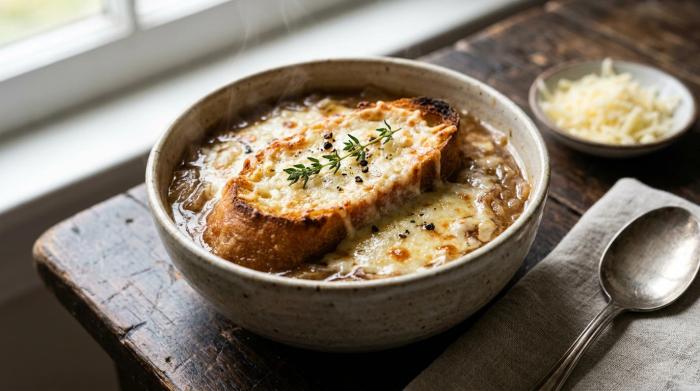
Cozy, Slow-Caramelized French Onion Soup from Scratch requires patience at the stove to build its dark, sweet base. The process takes about 90 minutes from start to finish. Raw sliced onions break down completely when you cook them slowly in butter, giving you a soft mixture to simmer in broth.
The Sweet Onions
Slicing your onions from top to bottom ensures the pieces stay intact as they cook. This cutting direction also stops the mixture from becoming stringy. Choosing a pot with a broad bottom gives the vegetables plenty of room to touch the heat, which makes the caramelization process go much faster.
A large batch of onions takes between 45 and 60 minutes to cook on the stove. You can start the onions in a slow cooker on low for 10 hours with melted butter. If you use a slow cooker, you still need to transfer the onions to a pot and cook them over medium-high heat for 10 to 15 minutes to get a fully browned finish.
The Soup Base
The hot liquid removes the browned pieces from the bottom of the pot and washes them into the soup. Dry, unoaked white wines like Sauvignon Blanc or Pinot Gris work well for this step. You can use a splash of beef broth to deglaze the pot if you prefer to skip the wine.
A light dusting of flour over the cooked onions slightly thickens the broth. When selecting your main liquid, low-sodium broth allows you to control the final salt content. A high-quality chicken or vegetable broth is a better choice than a low-quality beef broth.
The Cheese Toasts
The right bread makes the soup easier to eat. You need a bread with a soft crumb so a spoon can cut through it while it sits submerged in the bowl. Good options include:
- Soft French baguettes
- Thick slices of a basic sandwich loaf
Avoid chewy sourdough bread. Sourdough requires a knife to cut and fights against the spoon.
You can eliminate the need for oven-proof soup bowls by baking the cheese toast on a separate sheet pan. You also prevent the bread from soaking up too much liquid early by floating the toast into the bowls right before you eat.
Cozy, Slow-Caramelized French Onion Soup from Scratch
The Sweet Onions
- 2.5 lb brown or yellow onions, peeled, halved, and thinly sliced from top to bottom
- 3.5 oz unsalted butter
- Salt and black pepper
The Soup Base
- 1.5 quart high-quality, low-sodium beef or chicken broth
- 2 tbsp all-purpose flour
- 0.75 cup dry white wine, optional
- 2 dried bay leaves, or 3 fresh, optional
- 3 sprigs fresh thyme, optional
The Cheese Toasts
- 6 slice French baguette or other soft bread
- 3.5 oz Gruyère, mozzarella, or your choice of melting cheese
- Fresh parsley or thyme leaves for garnish, optional
We may earn a small commission from grocery & equipment links, at no cost to you. Disclosure.
Method
The Sweet Onions
The Soup Base
The Cheese Toasts
Substitutions
You can use a high-quality chicken or vegetable broth in place of the beef stock for The Soup Base.
If you prefer not to use dry white wine like Sauvignon Blanc, you can simply deglaze the pot with a splash of beef broth instead.
Serving
Baking The Cheese Toasts on a separate baking sheet eliminates the need for special oven-proof soup bowls.
Floating the baked bread on top of the bowls just before serving prevents the crust from becoming overly soggy.
Common mistakes
Avoid using a chewy sourdough bread for The Cheese Toasts because it becomes very difficult to cut through with a soup spoon.
Do not rely entirely on a slow cooker to caramelize The Sweet Onions because they need a final stovetop sear to develop true flavor.
Techniques
Cutting the onions from top to bottom allows the pieces to maintain their structure and keeps them from turning stringy.
You can speed up the caramelization step by cooking the onions in a pot that has a broad bottom.
You can partially cook the onions in a slow cooker on low for 10 hours and then finish them in butter on the stove for 10 to 15 minutes.
Always take your time when caramelizing onions because rushing the process over high heat will scorch them rather than drawing out their natural sugars.
Keep a close eye on the oven broiler when melting cheese since it can go from perfectly golden to burnt in just a few seconds.
Wait to adjust the final seasoning of any soup until the very end of cooking, as the liquids will reduce and concentrate the salt levels over time.
Can I freeze this soup?
Yes, you can freeze the soup base for up to three months in an airtight container. Keep the cheese and bread separate, and make fresh toasts when you are ready to reheat and serve the liquid.
My onions are still pale after 30 minutes of cooking. Did I do something wrong?
Not at all. The first 30 minutes of cooking over medium-low heat simply softens the onions until they become semi-transparent. They will develop their deep golden color during the final 20 to 30 minutes of cooking over slightly higher heat.
What if I cannot find a soft French baguette for the cheese toasts?
Thick slices of everyday sandwich bread are a perfectly fine alternative to an artisan loaf. The main goal is to pick a bread that has a soft interior. A softer crumb guarantees your spoon will easily cut through the submerged toast, whereas a chewy sourdough will make it difficult to break off a bite.
Can I caramelize the onions ahead of time?
Yes, cooking the onions in advance is a great way to save time on the day you plan to serve the meal. You can store the cooled onions in the refrigerator for several days, then gently warm them up in the pot before proceeding with the flour and broth.
How do I use the fresh parsley or thyme listed for the toasts?
Once the cheese on your bread is completely melted and spotted with brown patches under the broiler, pull the baking sheet out of the oven. Sprinkle the fresh parsley or thyme leaves directly over the hot cheese right before floating the toasts in your individual bowls.
Should I remove the fresh thyme sprigs and bay leaves before eating?
Yes, it is best to fish out the whole sprigs of thyme and the dried bay leaves before you ladle the liquid into your bowls. The woody stems and tough leaves have already released their flavor into the broth during the 30-minute simmer.
Add a private note
Private to this device - jot your tweaks, swaps and timings. (Syncs to your account later.)
What to serve with it
See all →


You might also like
See all →


The Friday 3-recipe dinner plan 🧡
Every Friday: three tested weeknight dinners + one shopping list, ready to go. No spam, ever - unsubscribe anytime.