Shredded Beef Ragu: A Thick, Slow Cooked Sauce for Pasta
The chuck roast falls apart after two hours of simmering, creating a thick and tender slow cooked shredded beef ragu pasta that clings to every noodle.
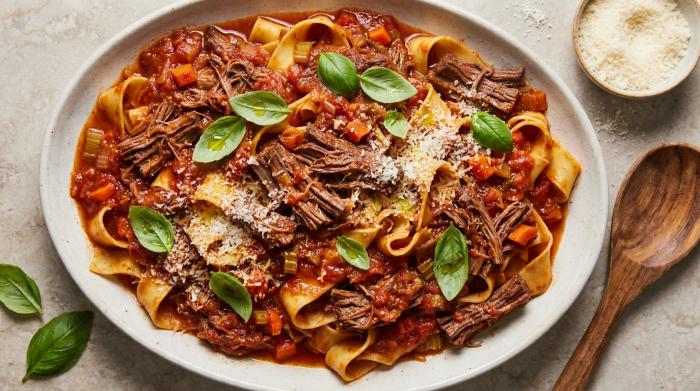
Shredded Beef Ragu: A Thick, Slow Cooked Sauce for Pasta requires a 2.5 lb (1.2 kg) beef chuck roast and 28 oz (800 g) of canned crushed tomatoes. The meat breaks down completely after two and a half hours on the stove. This creates a thick coating that sticks right to the noodles.
The Beef Ragu
You cut the beef chuck roast into four equal pieces. The smaller blocks cook thoroughly within the two-hour window.
Sear the meat aggressively in a pot with olive oil first. Take the beef out and cook the diced onion, garlic, carrots, and celery slowly over low heat. The vegetables soften and sweeten the base of the sauce. You can leave the carrots and celery out if you do not have them on hand.
You can use a full-bodied red wine like merlot or cabernet sauvignon for the cooking liquid. Combine the wine with the crushed tomatoes, tomato paste, water, and bouillon cubes. Liquid beef stock works fine as a substitute if you want to skip the water and bouillon cubes altogether. Toss in the dried thyme and bay leaves. Bring the pot up to a simmer and immediately drop the heat.
The long simmer
Cover the pot and let the liquid barely bubble on low heat for two hours. Maintaining a very gentle simmer ensures the sauce does not burn on the bottom of the pot, which easily happens if the mixture boils too fast.
Canned tomatoes vary in sweetness. You should taste the sauce near the end of the cooking time. You might need to add a small amount of sugar to balance the acidity. Adjust the salt and black pepper at this stage.
Shredding the beef
Pull the cooked meat out of the pot after two hours. Use two forks to pull the beef apart into coarse shreds.
Put the shredded meat back into the pot and simmer the Beef Ragu for another thirty minutes. The extra time on the stove thickens the liquid. The extra time also softens the meat further.
Adapting for a slow cooker
You might prefer to cook the meat in a slow cooker. You need to watch the clock if you choose this route. The meat turns into mush if you leave it in a slow cooker for more than eight hours.
Pay attention to the liquids and seasonings when adapting the dish for a pressure cooker or a slow cooker. Adding water and extra salt or black pepper to these appliances will result in an overly thin and salty sauce.
Pasta & Serving
Wide, flat egg pastas resist breaking when tossed. Pappardelle provides ample surface area for thick sauces to grab. You can use tagliatelle or fettuccine if pappardelle is unavailable.
Boil a large pot of salted water. Cook the noodles for one minute less than the package instructions. The pasta needs to finish cooking directly in the pan with the sauce.
Move the cooked pasta right into a wide skillet of hot Beef Ragu. Add three-quarters of a cup of starchy pasta water and toss the pan constantly for one to two minutes. The motion emulsifies the liquids so the sauce clings evenly to the noodles. You will get a poor coating if you plate plain cooked pasta and simply spoon the sauce over the top.
Storage and leftovers
The pasta must be eaten immediately after tossing it with the sauce. Plate the dish and top it with freshly grated parmesan or parmigiano reggiano cheese. Add some finely chopped fresh parsley if you want some extra color.
You can make the sauce ahead of time. The taste of the sauce improves when left to sit until the following day. Store the cooled meat sauce in the refrigerator for up to five days. The sauce also freezes well and can be kept frozen for several months. Wait to boil the pasta until you are ready to eat.
Shredded Beef Ragu: A Thick, Slow Cooked Sauce for Pasta
Beef Ragu
- 2.5 lb beef chuck roast, cut into 4 equal pieces, or other slow cooking cut
- 2 beef bouillon cubes, crumbled
- 1 cup full-bodied red wine, like merlot or cabernet sauvignon, or sub with beef broth
- 3 clove garlic, minced
- 1 onion, diced
- 1 cup carrots, diced
- 1 cup celery, diced
- 28 oz canned crushed tomatoes
- 3 tbsp tomato paste
- 3 tbsp olive oil, separated
- 1.5 cup water
- 1 tbsp salt
- Black pepper
- 0.75 tsp dried thyme, or 3 sprigs fresh thyme
- 3 dried bay leaves
Pasta & Serving
- 1 lb dried pappardelle, or other pasta of choice
- Freshly grated parmesan cheese or parmigiano reggiano
- Fresh parsley, finely chopped, optional
We may earn a small commission from grocery & equipment links, at no cost to you. Disclosure.
Method
Beef Ragu
Pasta & Serving
Substitutions
Whenever pappardelle is unavailable, you can substitute fettuccine or tagliatelle. Broad noodles give thick sauces ample surface area to cling to.
You can swap the combination of water and bouillon cubes for an equal amount of liquid beef stock.
The red wine can be replaced with beef broth, and the carrots and celery can be completely omitted if you do not have them on hand.
Storage
The flavor of the Beef Ragu actually improves when left to sit until the following day, and it can be stored in the refrigerator for up to five days.
This meat sauce freezes exceptionally well and can be kept frozen for several months.
Serving
Serve the dish immediately after tossing the pasta with the sauce so the noodles do not absorb too much moisture.
Common mistakes
Never plate plain cooked pasta and simply spoon the Beef Ragu over the top, as this prevents the sauce from properly clinging to the noodles.
Make sure the sauce stays at a very gentle simmer, because boiling it too rapidly will cause it to burn on the bottom of the pot.
If you adapt this recipe for an electric pressure cooker or a standard slow cooker, do not add extra water, salt, or pepper, because that will result in an overly thin and salty sauce.
Cooking the beef chuck in a slow cooker for more than eight hours will cause the meat to break down into an unappealing mush.
Techniques
Cutting the chuck roast into four equal pieces ensures the meat cooks thoroughly and becomes tender within the two hours of simmering.
Canned crushed tomatoes vary in sweetness, so always taste the finished sauce and add a small amount of sugar if needed to balance any tart acidity.
Simmering the shredded beef in the pot for an additional thirty minutes thickens the liquids and softens the meat even further.
Transferring undercooked pasta directly into the hot sauce and tossing it with starchy pasta water emulsifies the liquids for a perfectly coated dish.
Patting beef dry with a paper towel before searing removes surface moisture and guarantees a much better browned crust.
Always heavily salt your boiling water so the pasta noodles are properly seasoned from the inside out.
Wait for your pan and oil to get very hot before adding large cuts of meat so that they sear aggressively instead of steaming in their own juices.
- Store
- The flavor of the Beef Ragu actually improves when left to sit until the following day, and it can be stored in the refrigerator for up to five days. This meat sauce freezes exceptionally well and can be kept frozen for several months.
Can I make the Beef Ragu ahead of time?
Yes, the flavor of the meat sauce actually improves when allowed to sit until the following day. You can store the cooled sauce in the refrigerator for up to five days or freeze it for several months.
What if I prefer not to cook with red wine?
You can easily replace the red wine with an equal amount of beef broth.
What pasta should I use if I cannot find pappardelle?
Any wide, flat egg pasta like tagliatelle or fettuccine will work perfectly. These shapes are strong enough to resist breaking when tossed and provide ample surface area to hold the thick sauce.
How do I adapt this recipe for a slow cooker without ruining the sauce?
If you use a slow cooker, do not add the extra water, salt, or black pepper, as this will result in an overly thin and salty liquid. You must also limit the cooking time to under eight hours so the beef chuck does not turn into mush.
Can I simply spoon the cooked Beef Ragu over a bowl of plain pasta?
You should avoid plating plain pasta and pouring the sauce on top, as it prevents the sauce from clinging properly to the noodles. Instead, toss the undercooked pasta directly in the hot pan with a splash of starchy pasta water to emulsify the liquids for a perfectly coated dish.
Why is it important to pat the meat dry before searing?
Removing surface moisture with a paper towel prevents the meat from steaming in its own juices. This allows the beef to sear aggressively and develop a deeply browned crust.
Why do I need to add so much salt to the boiling water?
Heavily salting the boiling water ensures the pasta noodles are properly seasoned from the inside out before they are added to your sauce.
Add a private note
Private to this device - jot your tweaks, swaps and timings. (Syncs to your account later.)
What to serve with it
See all →



You might also like
See all →
The Friday 3-recipe dinner plan 🧡
Every Friday: three tested weeknight dinners + one shopping list, ready to go. No spam, ever - unsubscribe anytime.