Quick and Saucy Chicken Chow Mein for Busy Weeknights
Using chicken thighs keeps this speedy Chicken Chow Mein tender and juicy, while a rich soy and oyster blend coats every noodle.
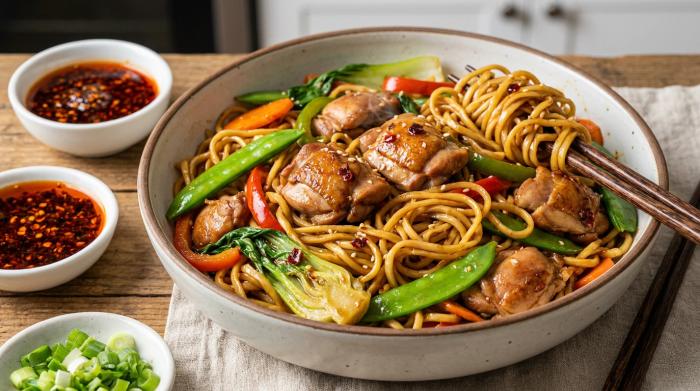
This Quick and Saucy Chicken Chow Mein for Busy Weeknights is perfect for tight schedules. You can chop all the fresh vegetables while the poultry marinates for 10 minutes. After the pan gets hot, the stir-frying process takes just over five minutes, producing enough to feed three people.
The stir-fry sauce
The sauce relies on all-purpose soy sauce or light soy sauce. Do not use dark soy sauce or sweet soy sauce in the mixture. Oyster sauce, sesame oil, sugar, and cornstarch complete the base. Chinese cooking wine, also known as Shaoxing wine, provides an authentic restaurant flavor.
Dry sherry makes an easy swap for the cooking wine. If you prefer mirin, that works perfectly, but remember to drop the added sugar down to a single teaspoon. To cook the meal without alcohol, switch out the wine for chicken broth and use additional chicken broth instead of the requested water. Choosing tamari over soy sauce will keep the plate gluten-free. Alternatively, you can bypass mixing the liquids from scratch by pouring in one third of a cup of a store-bought multi-purpose Chinese cooking sauce.
The chicken
Chicken thigh cooks up juicier than chicken breast or tenderloin. You toss the sliced meat in a small amount of the sauce and let it sit for ten minutes.
You can use chicken breast for this recipe. You might want to tenderize the breast meat first using the Chinese velveting method with baking soda. Other proteins work just as well. You can substitute the chicken with several alternatives:
- Beef, turkey, or pork cut into thin slices
- Whole prawns or shrimp
- Crumbled ground meat
The noodles
The traditional pasta for this dish consists of slender, slightly dry wheat noodles with a crinkly texture. Manufacturers produce them using egg and apply a light flour coating to the outside. Although you have the option to fry these strands until they turn crisp, this meal relies on a softer approach. You just need to soak the dried pieces in a heatproof bowl filled with boiled water for a single minute.
Pour off all the remaining liquid to keep the pasta from getting mushy. If you cannot track down the traditional wheat version at your local market, feel free to swap in any of these alternatives:
- Instant ramen noodles without the seasoning packet
- Thin spaghetti
- Slender egg noodles
The vegetables
Traditional chow mein vegetables include cabbage, carrots, and bean sprouts. You cut them into noodle-like shapes so the long slices blend naturally with the strands of pasta. You can use green, Chinese, savoy, or purple cabbage. Different varieties provide similar flavors and textures once cooked.
The cooking steps
You must prepare the sauce and chop all your ingredients before you start cooking. The stir-frying steps move fast over high heat. A wok works best for the high temperatures. You can cook the dish in a large skillet if a wok is unavailable. A large skillet helps prevent spilling while you toss the ingredients. You cook the finely chopped garlic in hot peanut oil for ten seconds. Do not allow the garlic to burn.
The marinated chicken goes into the pan next. You cook the meat for one minute until the outside shows a hint of brown while the center remains uncooked.
The shredded cabbage, the julienned carrot, and the white sections of the green onions join the chicken. You keep everything moving constantly for a minute and a half until the vegetables are mostly wilted.
The drained noodles, the remaining sauce, and the water go in next. You toss the mixture for one minute until the dark liquid coats everything. Finally, you scatter in the bean sprouts and the rest of the green onions. You toss the food for thirty seconds until the greens barely begin to soften.
Serving portions
You must take the pan off the heat immediately so the vegetables retain their crunch. Serve the dish immediately after removing it from the stove. The standard recipe yields two very large portions. You can comfortably serve three people by dividing the pan into slightly smaller plates.
Quick and Saucy Chicken Chow Mein for Busy Weeknights
Chicken & Noodles
- 6 oz chicken breast or thigh fillets, thinly sliced, tenderize if desired
- 4 cup green cabbage, finely shredded
- 2 clove garlic, finely chopped
- 1 carrot, julienned
- 3 green onions, cut into 2-inch (5 cm) pieces
- 6 oz chow mein noodles
- 1.5 tbsp peanut oil, or other cooking oil
- 1.5 cup bean sprouts
- 0.25 cup water
Sauce
- 2 tsp cornstarch
- 2 tsp sugar, reduce to 1 tsp if using mirin
- 0.5 tsp sesame oil
- 1.5 tbsp soy sauce, all-purpose or light
- 1.5 tbsp oyster sauce, or substitute hoisin
- 1.5 tbsp Chinese cooking wine, or mirin
- White pepper, or substitute black
We may earn a small commission from grocery & equipment links, at no cost to you. Disclosure.
Method
Sauce
Chicken & Noodles
Cooking
Easy swaps
- the soy sauce→tamari
Substitutions
For an alcohol-free version, replace the Chinese cooking wine with chicken broth and swap the 1/4 cup (65 ml) of water for additional chicken broth.
Pour in 1/3 cup of a pre-made all-purpose Chinese stir-fry sauce instead of combining the individual condiments yourself.
Use tamari in place of the soy sauce to easily make this meal gluten-free.
You may substitute the chow mein for instant ramen noodles, provided you discard the included seasoning packet. Fine egg noodles and thin spaghetti also work well for this recipe.
Serving
This Quick and Saucy Chicken Chow Mein for Busy Weeknights yields two very large portions but can comfortably feed three people.
Common mistakes
Do not use dark soy sauce or sweet soy sauce in your mixture or it will ruin the intended flavor profile.
Be careful not to let the chopped garlic burn in the hot peanut oil during the first ten seconds of cooking.
Techniques
Mix your sauce and chop all your vegetables before turning on the stove because the actual stir-frying takes just over five minutes.
Cut your cabbage and carrots into long shapes so they blend perfectly with the noodles.
Always heat your wok or skillet completely before adding the cooking oil to prevent proteins from sticking to the metal.
Slice meat thinly and against the grain to ensure every piece cooks up as tender as possible.
Avoid overcrowding the pan during a fast stir-fry so the ingredients sear rather than steam in their own juices.
Why should I heat the wok before adding the cooking oil?
Heating your pan completely before adding cold oil creates a non-stick surface. This helps prevent proteins from sticking to the metal during a fast stir-fry.
What happens if I try to double the recipe in a single pan?
You should avoid overcrowding the pan during a fast stir-fry. Adding too many ingredients lowers the temperature, causing the meat and vegetables to steam in their own juices rather than getting a proper sear.
I do not consume alcohol. How do I adjust the liquids for the sauce?
You can easily make an alcohol-free version by replacing the Chinese cooking wine with chicken broth. You must also swap the 1/4 cup (65 ml) of water for additional chicken broth to maintain the correct flavor and volume.
Can I meal prep this Quick and Saucy Chicken Chow Mein for Busy Weeknights?
It is best to enjoy this dish immediately after removing it from the stove. Serving it right away ensures the cabbage and bean sprouts retain their crunch and the noodles do not become soggy.
What if I do not want to mix the sauce from scratch?
If you prefer a faster preparation, you do not need to measure and mix the cornstarch, soy sauce, and other liquid seasonings from scratch. Simply swap the homemade recipe for 1/3 cup of a bottled multi-purpose cooking liquid, pouring it straight into the pan when it is time to coat the softened noodles.
Why are the green onions added at two different times during the cook?
The white sections of the green onions go in early with the carrots and cabbage to cook down and release their flavor. The rest of the green onions are tossed in at the very end so they barely soften and retain their fresh bite.
Why is it important to slice the meat against the grain?
Slicing meat thinly across the muscle fibers breaks them into shorter segments. This technique ensures every piece cooks up as tender as possible when subjected to high heat.
Add a private note
Private to this device - jot your tweaks, swaps and timings. (Syncs to your account later.)
What to serve with it
See all →

You might also like
See all →

The Friday 3-recipe dinner plan 🧡
Every Friday: three tested weeknight dinners + one shopping list, ready to go. No spam, ever - unsubscribe anytime.