One-Pan Ramen Noodles with Chicken and Vegetable Stir-Fry
These fast Chicken Vegetable Ramen Noodles cook entirely in one skillet so the dry pasta absorbs the seasoned liquid as it softens.
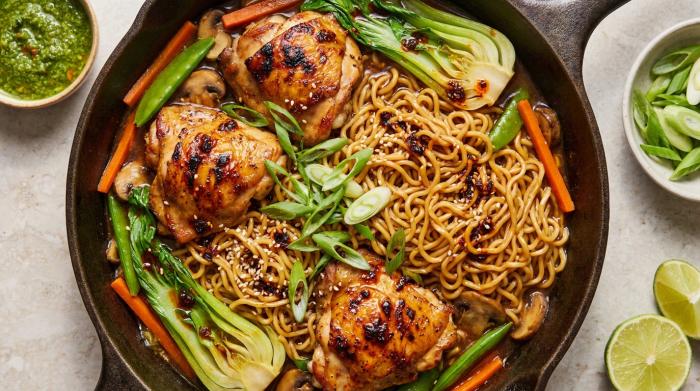
This One-Pan Ramen Noodles with Chicken and Vegetable Stir-Fry provides three servings due to its high volume of fresh vegetables like carrots and sliced bell peppers. Cooking the dry pasta right inside the skillet draws out starch, naturally thickening the Savory Sauce into a glossy finish without requiring added cornstarch.
Choosing the noodles
Standard instant noodle packets or plain noodle cakes fit into the pan without issue. Extra-large unbroken ramen cakes prevent the blocks from fitting and cooking all the way through. You must discard the seasoning packets included with the instant noodles before you begin.
The one-pot method ruins the dish if you use fresh or alternative dried noodles. You can replace the instant ramen as long as you cook the alternative noodles in a separate pot before tossing them into the skillet. You can use:
- Fresh noodles
- Rice noodles
- Other dried wheat noodles
Meat and vegetable preparation
Chicken thighs caramelize better than breasts or tenderloins because they hold more moisture. Ground chicken can also replace the sliced chicken thighs or breasts in the pan.
You need a large skillet to cook this meal. A small skillet causes the ingredients to spill over the edges when you toss them. Slice the vegetables into long shapes so they blend in with the noodle strands.
The Savory Sauce components
The Savory Sauce requires dark soy sauce to yield a deep color and strong taste. You can alter the sauce ingredients based on what you have in your pantry:
- Standard soy sauce works as a direct replacement, but the final dish will look lighter.
- Low-sodium soy sauce can replace regular soy sauce to lower the overall salt level.
- Vegetarian oyster sauce works as a simple replacement for standard oyster sauce.
Mirin is a sweet rice wine from Japan used for cooking. Dry sherry or a cooking wine from China can serve as a replacement. To completely omit this ingredient, swap the standard water amount for half a cup of water mixed with three-quarters of a cup of low-sodium chicken broth.
The one-pan cooking method
You push the cooked chicken and vegetables to the outer edges of the skillet to create open space in the center. The dry ramen blocks sit directly in the water in the middle of the pan. You simmer the noodle blocks for 45 seconds before flipping them over with tongs. Wait 30 seconds for the blocks to soften further, then untangle the strands and toss everything together. Add a little extra water during cooking if the noodles need more time to soften.
Serving and leftovers
Because this recipe includes so many vegetables, the meal yields three servings. Bring the portions to the table right away while the food is still hot. You can finish each plate with an optional Garnish of chopped green onions.
Leftover cooked noodles keep for up to four days. Store the extra portions in the refrigerator inside an airtight container.
One-Pan Ramen Noodles with Chicken and Vegetable Stir-Fry
Ingredients
- 7 oz chicken thighs, cut into bite-size pieces
- 2 garlic cloves, minced
- 0.5 onion, sliced
- 1 carrot, cut into matchsticks
- 1 small red bell pepper or capsicum, sliced
- 2 cup cabbage, finely sliced, any variety
- 1 tbsp oil
- 1.25 cup water, plus more as needed
- 2 packets instant ramen or other dried noodles, seasoning discarded
Savory Sauce
- 1 tbsp dark soy sauce
- 1 tbsp oyster sauce, or hoisin
- 2 tsp hoisin sauce, or additional oyster sauce
- 1 tbsp mirin
Garnish
- Finely sliced green onions or shallots, optional
We may earn a small commission from grocery & equipment links, at no cost to you. Disclosure.
Method
Substitutions
You can use fresh noodles, rice noodles, or other dried wheat noodles, but they must be cooked separately before tossing them with the Savory Sauce and vegetables.
Dry sherry or a generic Asian rice wine works well if you need an alternative for the mirin. To skip it completely, ignore the usual 1 1/4 cups (315 ml) of water and pour in 3/4 cup of low-sodium chicken broth mixed with 1/2 cup of water instead.
Standard soy sauce can replace the dark soy sauce if you do not mind a lighter final color.
Storage
Leftover One-Pan Ramen Noodles with Chicken and Vegetable Stir-Fry will keep for up to four days when stored in an airtight container in the refrigerator.
Serving
This dish yields three hearty portions due to the high volume of cabbage and other vegetables included.
Common mistakes
Avoid using a small skillet because the generous amount of vegetables and noodles will easily spill over the edges during tossing.
Do not attempt to cook extra-large unbroken ramen cakes in the pan because they will not fit or soften properly in the remaining space.
Cooking fresh or alternative dried noodles directly in the pan will turn them mushy and ruin the final texture.
Techniques
Simmering the dried ramen directly in the skillet releases starches that naturally thicken the Savory Sauce without the need for cornstarch.
Slice your vegetables into long strips or matchsticks so they blend effortlessly with the noodle strands.
Always have your vegetables fully prepped and sliced before turning on the stove, as stir-fries move very rapidly over high heat.
Cut the chicken into uniform pieces so the meat cooks at the exact same rate without drying out.
- Store
- Leftover One-Pan Ramen Noodles with Chicken and Vegetable Stir-Fry will keep for up to four days when stored in an airtight container in the refrigerator.
Can I use fresh or rice noodles instead of instant ramen?
Yes, but you must cook them separately first. Cooking fresh or alternative dried noodles directly in the pan will turn them mushy and ruin the final texture.
How do I make this dish without mirin?
Dry sherry is a great substitute for the mirin. To skip the mirin altogether, use a blend of 1/2 cup of water and 3/4 cup of low-sodium chicken broth instead of the standard 1 1/4 cups (315 ml) of water.
Can I use chicken breast instead of thighs?
Yes, or you can even use ground chicken. However, chicken thighs are recommended because they hold more moisture and caramelize better in the pan.
What can I use if I do not have dark soy sauce?
Standard soy sauce works as a direct replacement. The final dish will still taste great, but the noodles will have a lighter color.
How long do the leftover noodles last?
Leftovers will keep for up to four days. Store the extra portions in the refrigerator inside an airtight container.
How many people does this recipe feed?
This dish yields three hearty portions due to the high volume of cabbage and other vegetables included. Serve the portions immediately while the food is still hot.
Why did my instant noodles not soften evenly?
You may have used extra-large unbroken ramen cakes, which do not fit or cook properly in the remaining space. Always stick to standard-sized instant noodle packets or plain noodle cakes.
Why do I need to use a large skillet?
A small skillet causes the generous amount of vegetables and noodles to spill over the edges during tossing. You need the extra space to mix everything thoroughly.
How does the sauce get thick without cornstarch?
Simmering the dried ramen directly in the skillet releases natural starches into the liquid. This naturally thickens the Savory Sauce into a glossy finish.
What if the noodles are still stiff after the recommended cooking time?
Simply add a little extra water during cooking. Allow the noodles to simmer until they soften enough to easily untangle.
Why should I cut the vegetables into matchsticks?
Slicing your carrots, bell peppers, and cabbage into long strips allows them to blend effortlessly with the noodle strands.
Why is it important to prep all my ingredients before cooking?
Stir-fries move very rapidly over high heat. Always have your vegetables fully prepped and sliced before turning on the stove so nothing burns while you chop.
How do I keep the chicken from drying out in a stir-fry?
Cut the meat into uniform pieces before adding them to the hot pan. This ensures every piece cooks at the exact same rate.
Add a private note
Private to this device - jot your tweaks, swaps and timings. (Syncs to your account later.)
What to serve with it
See all →

You might also like
See all →


The Friday 3-recipe dinner plan 🧡
Every Friday: three tested weeknight dinners + one shopping list, ready to go. No spam, ever - unsubscribe anytime.