Fall-Apart Slow Roasted Lamb Shoulder, Garlic & Rosemary
Cooking a bone-in shoulder at a low temperature yields a fall-apart slow roasted rosemary garlic lamb shoulder with deeply savory pan juices.
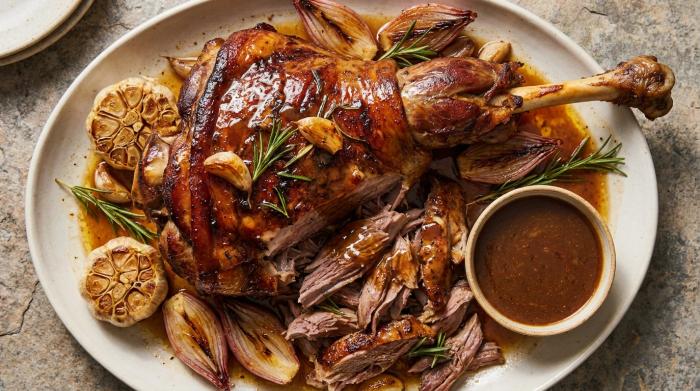
Preparing a Slow Roasted Rosemary Garlic Lamb Shoulder starts with a 3.5 lb (1.8 kg) bone-in lamb shoulder. This particular cut carries a thick exterior coating of fat that relies on gentle, lengthy cooking to become soft. You will place the sealed roasting dish into a 350°F (180°C) oven for 3 hours. The water at the bottom of the pan steams the meat throughout this covered phase, melting the dense fat and leaving you with tender pulled lamb sitting above the dark cooking juices.
The bone-in lamb shoulder
Lamb shoulder contains a large central bone and a thick surface layer of fat. This fatty cut needs hours of gentle heat to become tender. You will end up with tough, unchewable meat if you cook lamb shoulder quickly at high temperatures.
Preparing the meat
Rub the lamb with olive oil, salt, and black pepper. Cut 12 small incisions into the meat. Go as deep as possible without piercing the bottom. A hole through the underside lets the internal juices drain into the pan.
Insert garlic cloves, sliced into thin slivers, and rosemary sprigs into the holes. Rosemary stems are naturally stiff, so they slide easily into narrow knife cuts. You can use a chopstick to push the herbs and garlic deep down into the meat.
The two oven stages
Scatter these ingredients across the bottom of your roasting dish to build the base:
- Onion quarters
- The head garlic, halved crosswise
- A few rosemary sprigs
Set the raw meat directly on top of these aromatics. Pour 1 cup of water into the dish and seal the top tightly with foil. Preheat the oven to 465°F (240°C). Put the covered dish in the oven and immediately drop the temperature to 350°F (180°C). The water steams the meat while it roasts covered for 3 hours.
Take the foil off to expose the skin. Turn the oven heat up to 425°F (220°C) to brown the surface. Check the liquid level in the pan first. Pour in 3/4 cup of water if the dish looks dry. The base aromatics will burn if you leave the pan dry during this final uncovered phase. Roast the lamb for another 20 to 30 minutes until the skin turns brown and crisp.
Resting the meat
Test the meat for doneness by pulling it apart with two forks. The meat should give way easily. Put the cover back on and return the dish to the 350°F (180°C) oven if the lamb resists.
Move the finished lamb to a plate. Drape it loosely with foil and lay tea towels over the top to keep the heat in. The meat needs to rest for at least 20 minutes. You can rest the cooked roast at room temperature under the towels for up to two hours before carving and reheating.
The pan gravy
Tip the roasting dish so the cooking liquids pool in one corner. Skim off the excess fat from the surface, leaving about 2 tablespoons behind. Keep the dark juices in the dish. Your gravy will taste bland if you scoop out the dark pan juices along with the excess fat.
Set the dish on the stove over medium high heat. Stir 2 tablespoons of flour into the fat and cook the paste for 30 seconds. Pour in the beef broth (or 1 cup red wine and 1 cup water).
Take a potato masher and crush the roasted onion and garlic directly into the cooking liquid. Press the vegetables until the soft garlic pushes out of its skins. Simmer the gravy for 1 to 2 minutes until it thickens. Push the liquid through a strainer into a bowl. Squeeze the solids hard to extract all the retained liquid.
Portions and side dishes
A 1.5-kilogram bone-in lamb shoulder shrinks during cooking due to fat loss. This size yields approximately 700 grams of cooked meat. This provides enough cooked meat for four servings.
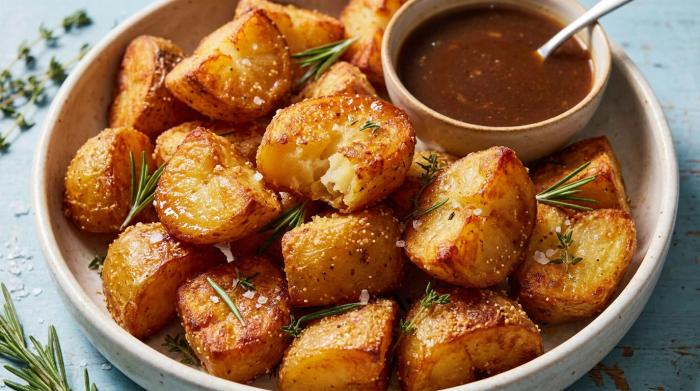
Serve the shredded lamb with a generous pour of the strained pan gravy. You can cook roast potatoes on the lower oven rack during the meat's final uncovered browning phase to serve alongside the roast.
Fall-Apart Slow Roasted Lamb Shoulder, Garlic & Rosemary
Ingredients
- 3.5 lb bone-in lamb shoulder
- 1 onion, cut into quarters, leave the peel on
- 1 head garlic, halved crosswise
- 3 garlic cloves, sliced into thin slivers
- 2 tbsp olive oil
- 1 cup water
- 2 tsp salt
- 1 tsp black pepper
- 8 sprigs rosemary
Gravy
- 2 cup beef broth, or 1 cup red wine and 1 cup water
- 2 tbsp flour
- Salt and black pepper
We may earn a small commission from grocery & equipment links, at no cost to you. Disclosure.
Method
Gravy
Substitutions
To customize the richness of your finished sauce, you can build the gravy using straight beef broth (or 1 cup red wine and 1 cup water) depending on your flavor preference.
Storage
The fully cooked roast can rest safely at room temperature for up to two hours under loose foil and towels before you need to shred or reheat it.
Serving
Keep in mind that a raw bone-in lamb shoulder loses a significant amount of weight during cooking due to shrinkage and fat loss, so plan your portions accordingly.
Common mistakes
Be careful not to pierce all the way through the bottom of the meat when making incisions so the internal juices do not leak out into the pan.
Make sure to check the pan during the uncovered browning phase and add water if it looks dry so the base aromatics do not burn.
When skimming the cooking liquids, take care to only remove the clear fat and leave the dark pan juices behind so you do not end up with a flavorless gravy.
Techniques
Use a chopstick to help push the rosemary sprigs and the garlic cloves, sliced into thin slivers, deep down into the cuts in the meat.
Mash the pan-roasted onion and the head garlic, halved crosswise, directly into the drippings using a potato masher to extract maximum flavor.
Always let large cuts of roasted meat rest undisturbed after cooking so the internal juices have time to redistribute evenly.
Cooking raw flour in hot fat for a short time removes its starchy taste and builds a better flavor base for sauces.
- Store
- The fully cooked roast can rest safely at room temperature for up to two hours under loose foil and towels before you need to shred or reheat it.
How many servings does a bone-in lamb shoulder make?
A 3.5 lb (1.8 kg) bone-in lamb shoulder will shrink significantly during cooking due to fat loss. For context on yield, a 1.5 kilogram raw shoulder provides approximately 700 grams of cooked meat, which is enough for four servings.
Why did my base aromatics burn while the meat was browning?
The roasting pan can easily dry out when you remove the foil for the final uncovered browning phase. Always check the liquid level first and pour in 3/4 cup of water if it looks dry so the onion and the head garlic, halved crosswise, do not scorch.
How do I get the fresh herbs and garlic deep into the meat?
A chopstick works perfectly for pressing the thin garlic slivers and rosemary sprigs deep into the meat. The stems of the rosemary are naturally rigid, meaning they slip right down into those tight incisions along with the garlic.
What happens if my knife pierces all the way through the meat?
You must stop your knife before it hits the underside of the roast when making your deep incisions. A hole completely through the bottom allows the internal juices and the stuffed aromatics to leak out into the pan.
Why is my pan gravy lacking flavor?
You may have accidentally discarded the savory pan juices when skimming the cooking liquids. Make sure to only remove the clear excess fat from the surface and leave the dark pan juices behind to build a rich flavor base.
How long can I hold the cooked roast before carving?
The fully cooked meat can rest safely at room temperature for up to two hours before you need to shred or reheat it. Simply move the roast to a plate, drape it loosely with foil, and lay tea towels over the top to keep the heat in.
Can I use wine in the gravy instead of plain broth?
Yes, you can easily customize the richness of your finished sauce depending on your flavor preference. You can build the gravy using 2 cups of beef broth (or 1 cup red wine and 1 cup water) as your cooking liquid.
Why is it important to rest a large cut of roasted meat before serving?
You should always let large cuts of roasted meat rest undisturbed after cooking. This resting period ensures the internal juices have time to redistribute evenly throughout the muscle fibers, keeping the meat moist when it is portioned.
Why do I need to cook the flour in fat before adding liquid for a gravy?
Cooking raw flour in hot fat for a short time removes its starchy taste. This brief cooking step builds a much better, deeper flavor base for all kinds of pan sauces.
Add a private note
Private to this device - jot your tweaks, swaps and timings. (Syncs to your account later.)
What to serve with it
See all →
You might also like
See all →

The Friday 3-recipe dinner plan 🧡
Every Friday: three tested weeknight dinners + one shopping list, ready to go. No spam, ever - unsubscribe anytime.