Fall-Apart Beef Short Ribs, Braised in Thick Red Wine Sauce
After three hours in the oven, tough cuts of beef break down into tender, fall-apart Braised Beef Short Ribs in Red Wine Sauce.
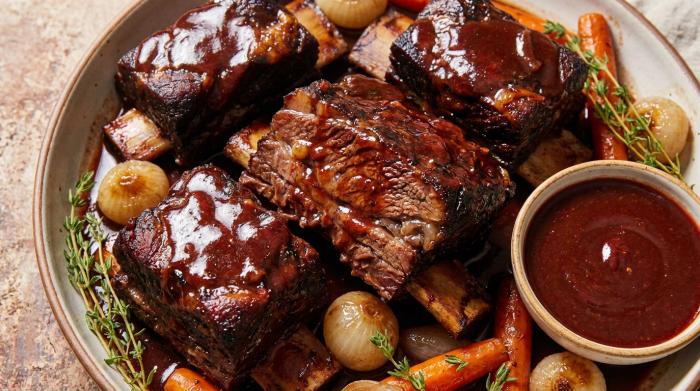
These firm, heavily marbled cuts demand a long bake to soften. Spending three hours at 325°F (160°C) yields tender Fall-Apart Beef Short Ribs, Braised in Thick Red Wine Sauce. This oven method caramelizes the surfaces, while passing the remaining liquid through a sieve creates a perfectly smooth finishing glaze.
Choosing the meat
Raw, bone-in short ribs are very rich, meaning a single piece weighing 10 ounces (300 g) makes a complete serving. If you cannot find them, you can substitute different tough beef options. Just chop the replacement meat to matching dimensions so the pieces bake at an even rate. Excellent choices are:
- Chuck roast
- Beef shanks
- Osso buco
- Beef brisket
The braising liquid
Robust red wines such as Cabernet Sauvignon, Shiraz, or Merlot provide the best flavor foundation. Lighter red wines such as Pinot Noir lack the necessary body for this braising liquid. An inexpensive bottle works perfectly well. The alcohol evaporates during the cooking process, and the heat completely transforms the taste.
People looking to avoid liquor entirely have two straightforward substitute paths. Pouring in a zero-alcohol red serves as an exact swap for the standard bottle. As a second option, you can trade out the two cups of wine for a homemade blend. To do this, simply measure out half a cup of low-sodium beef stock or broth, mix it with one and a half cups of water, and stir in one tablespoon of Worcestershire sauce.
Building the sauce base
You start by browning the first batch of beef and then the rest of the beef in a big oven-safe pot. This aggressive browning step builds a dark crust on the meat and leaves browned bits called fond on the pot base.
The next step builds a foundational flavor base called a soffritto. You slowly cook the onion, garlic, carrot, and celery in the same pot.
You then cook the tomato paste briefly. This short cooking time removes its raw taste before you pour the liquids into the pot.
The oven braise
You braise the meat in the oven because it works better than stovetop cooking. The ambient heat inside the oven caramelizes the surface of both the beef and the sauce.
Keep the fleshy portion of every piece fully underneath the liquid level. Any beef left exposed above the broth will fail to cook correctly.
Straining and thickening the sauce
Baking the meat for three hours breaks down its tight internal structures, leaving it fork-tender. This process also weakens its grip on the bone, meaning you must remove the beef from the pot gently to keep the portions intact.
The leftover liquid holds a lot of rendered fat from the beef. You can remove this excess fat by resting the sauce in a jug and skimming the top.
You pour the liquid through a strainer to catch the vegetable chunks. This leaves you with a smooth sauce. If you skip the final stove reduction, the glaze stays too thin.
You must simmer the strained sauce on the stove so it reduces to a thick, syrup-like consistency.
Plating the beef
You can serve the ribs exactly as they come out of the pot. If you want a more refined presentation, you can remove the bone and the fatty tissue from the underside before placing the meat on the plates. Spoon the thick, glossy sauce directly over the top of the beef.
Fall-Apart Beef Short Ribs, Braised in Thick Red Wine Sauce
Meat & Aromatics
- 5 beef short ribs, 10 to 14 oz (300 to 400 g) each
- 3 garlic cloves, crushed
- 1 large onion, chopped, brown, yellow, or white
- 2 celery ribs, chopped
- 2 carrots, chopped
- 2 tbsp tomato paste
- 2 tbsp olive oil
- 1.5 tsp each salt and black pepper
Braising Liquid
- 2 cup low-sodium beef stock or broth
- 2 cup dry red wine
- 2 bay leaves
- 2 sprigs thyme, optional
We may earn a small commission from grocery & equipment links, at no cost to you. Disclosure.
Method
Substitutions
To make this without alcohol, replace the wine with half a cup of low-sodium beef stock or broth, one and a half cups of water, and one tablespoon of Worcestershire sauce.
Alternative slow-cooking beef cuts like chuck, shanks, osso buco, or brisket work perfectly if they are cut to a similar size.
Pick a robust dry red, such as Shiraz or Cabernet Sauvignon, and avoid lighter varieties like Pinot Noir because they lack the necessary body for the braising liquid.
Serving
Plan on serving one 10-ounce (300 g) bone-in short rib per person because this cut is incredibly rich.
For a more refined presentation on the plate, remove the bone and the underside fatty tissue before serving.
Common mistakes
Check that the thickest section of meat on every rib sits fully beneath the liquid before braising so it cooks correctly.
Do not skip simmering the strained sauce on the stove, or your final glaze will end up much too thin.
Techniques
You can easily remove excess fat by letting the finished liquid rest in a jug and skimming the top layer before you reduce it.
Always pat raw beef completely dry with paper towels to ensure it browns aggressively when it hits the hot oil.
Give the first batch of beef plenty of space in the big oven-safe pot so the meat sears effectively instead of steaming.
Can I make this without alcohol?
Yes, you can use a zero-alcohol red wine as a direct swap. Alternatively, replace the two cups of dry red wine with half a cup of low-sodium beef stock or broth, one and a half cups of water, and one tablespoon of Worcestershire sauce.
What other cuts of meat work if I cannot find short ribs?
You can use alternative slow-cooking beef cuts like chuck roast, beef shanks, osso buco, or beef brisket. Just chop the replacement meat to a similar size so the pieces bake at an even rate.
What kind of red wine is best for the braising liquid?
Choose a full-bodied dry red wine like Cabernet Sauvignon, Shiraz, or Merlot for the best flavor foundation. Avoid lighter options like Pinot Noir that lack the necessary body, but feel free to use an inexpensive bottle since the cooking process completely transforms the taste.
Why is my finished sauce too thin?
You likely skipped the final reduction step. After straining the vegetables, you must simmer the smooth sauce on the stove so it reduces to a thick, syrup-like consistency.
How can I remove the excess fat from the finishing glaze?
The leftover liquid will hold a lot of rendered fat from the beef. You can easily remove this by letting the strained sauce rest in a jug and skimming the top layer before reducing it on the stove.
How many ribs should I plan to serve per person?
Plan on serving one 10-ounce (300 g) bone-in short rib per person. This cut is incredibly rich, heavily marbled, and makes a complete serving on its own.
Do I need to dry the meat before browning?
Yes, always pat raw beef completely dry with paper towels. This ensures it browns aggressively when it hits the hot oil instead of steaming.
Why do I need to brown the meat in separate batches?
You must give the first batch of beef and the rest of the beef plenty of space in the big oven-safe pot. Overcrowding the pan causes the meat to steam rather than sear effectively.
How can I plate the ribs for a more refined presentation?
Baking the meat for three hours loosens its grip on the bone. To make the plated dish look more elegant, carefully remove the bone and the underside fatty tissue before spooning the thick sauce over the top.
Add a private note
Private to this device - jot your tweaks, swaps and timings. (Syncs to your account later.)
What to serve with it
See all →
You might also like
See all →
The Friday 3-recipe dinner plan 🧡
Every Friday: three tested weeknight dinners + one shopping list, ready to go. No spam, ever - unsubscribe anytime.